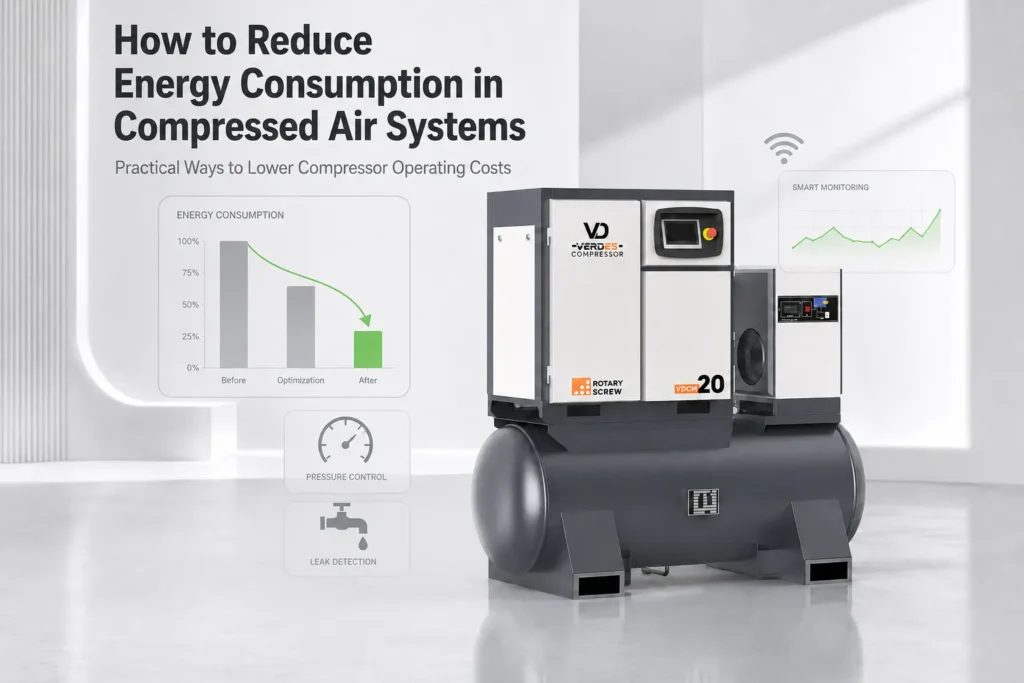
Compressed air is one of the most widely used utilities in modern factories. It powers production lines, pneumatic tools, CNC machines, packaging equipment, spraying systems, and many other industrial processes. However, compressed air can also be one of the most expensive forms of energy if the system is not properly designed, operated, and maintained.
For many manufacturers, reducing energy consumption in compressed air systems is not only about saving electricity. It also helps improve production stability, extend equipment service life, and reduce unnecessary maintenance costs. Below are practical ways to make your compressed air system more efficient.
1. Choose the Right Air Compressor Size
One of the most common causes of energy waste is using an air compressor that is either too large or too small for the actual air demand.
An oversized compressor may run under low-load conditions for long periods, causing unnecessary power consumption. A compressor that is too small may work continuously at high load, leading to pressure instability and faster wear.
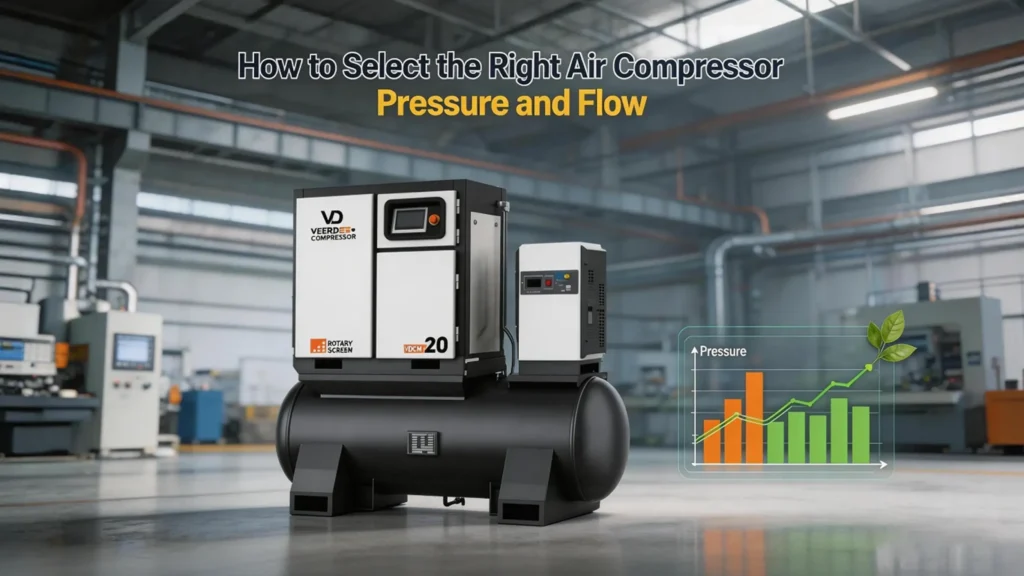
Before selecting a compressor, factories should check:
- Required air flow
- Working pressure
- Peak air demand
- Number of machines using compressed air
- Future expansion plans
- Air quality requirements
A properly selected industrial air compressor can provide stable air supply while avoiding unnecessary energy loss.
Related passage:How to Select the Right Air Compressor Pressure and Flow:Choose the Right Size for Your Application – vdcompresor.com
2. Use PM VSD Compressor Technology
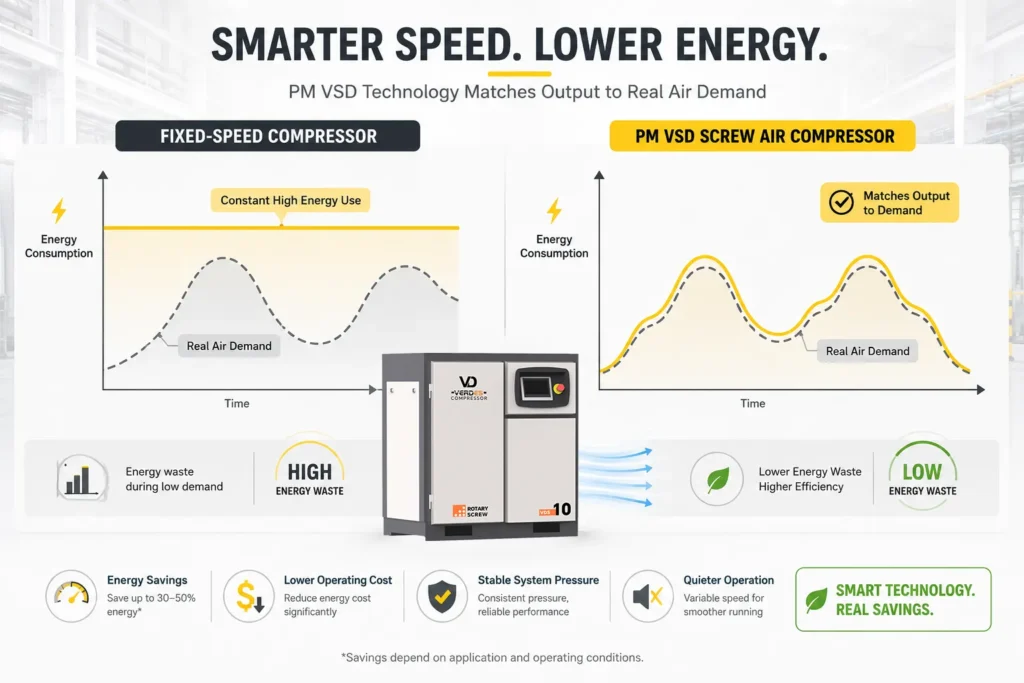
Permanent Magnet Variable Speed Drive, also called PM VSD, is one of the most effective technologies for reducing air compressor energy consumption.
Traditional fixed-speed compressors run at a constant speed, even when the factory does not need full air output. In contrast, a PM VSD screw air compressor automatically adjusts motor speed according to real-time air demand. When air demand decreases, the compressor reduces speed and consumes less electricity.
For factories with fluctuating air demand, such as CNC machining workshops, packaging lines, textile production, and general manufacturing, PM VSD technology can help reduce energy costs significantly compared with fixed-speed operation.
3. Reduce System Pressure
Many factories operate compressed air systems at a higher pressure than necessary. Higher pressure means higher energy consumption. In many systems, reducing pressure by 1 bar can help lower electricity usage by around 7%, depending on the system condition and operating pattern.
The key is to understand the real pressure requirement of each application. For example, not every machine needs 10 bar or 12 bar. Some tools and production equipment may work efficiently at lower pressure.
To reduce pressure safely:
- Check the minimum pressure required by end-use equipment
- Avoid setting pressure based only on “safety margin”
- Use pressure regulators where needed
- Monitor pressure drop across filters, dryers, and pipelines
- Maintain stable pressure instead of simply increasing pressure
A stable and properly controlled pressure setting is often more efficient than a high-pressure setting.
4. Fix Air Leaks Regularly
Air leaks are one of the biggest hidden sources of energy waste in compressed air systems. Small leaks from fittings, hoses, valves, quick connectors, and old pipelines can add up to a large loss over time.
Common leakage points include:
- Pipe joints
- Air hoses
- Solenoid valves
- Drain valves
- Filter housings
- Quick couplings
- Old seals and gaskets
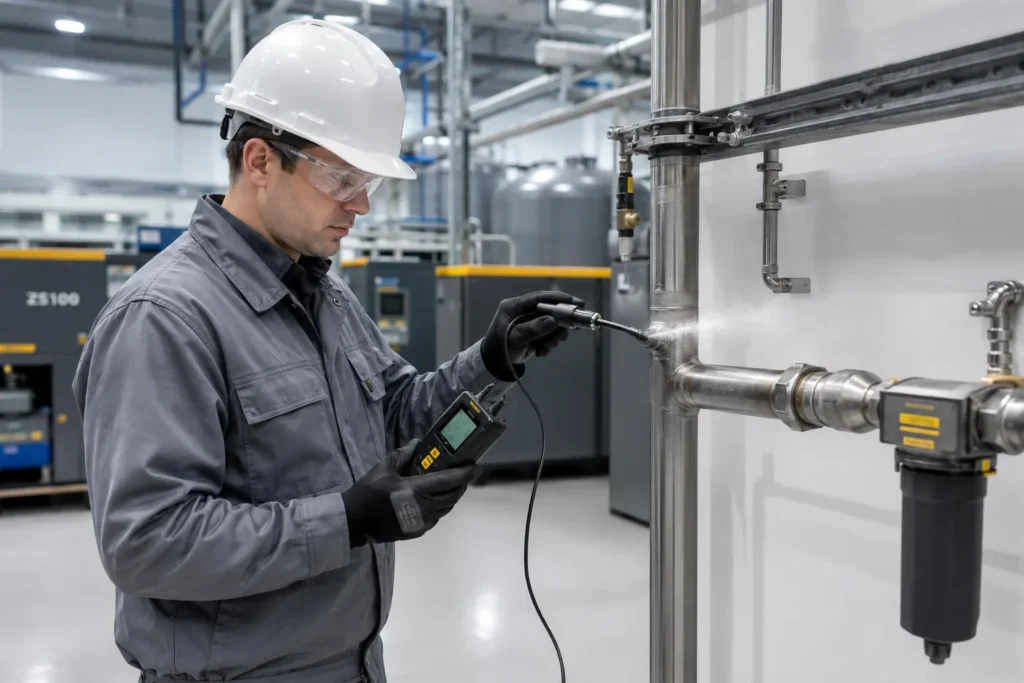
A leak detection program should be part of regular factory maintenance. Even a simple inspection during non-production hours can help identify obvious leakage points. For larger factories, ultrasonic leak detectors can make the process faster and more accurate.
Fixing leaks does not require major investment, but it can bring direct and continuous energy savings.
5. Improve Air Treatment Efficiency
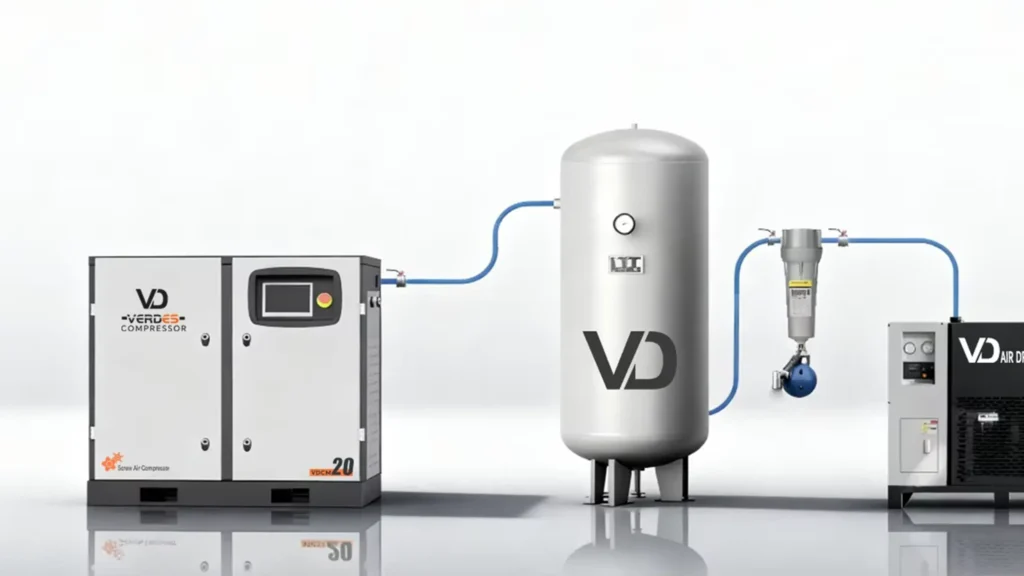
Clean and dry compressed air is important for production quality, especially in applications such as laser cutting, spray painting, food processing, electronics, and precision machinery. However, poorly maintained air dryers and filters can create excessive pressure drop.
When pressure drop increases, the compressor needs to work harder to maintain the required pressure at the end-use point.
To improve air treatment efficiency:
- Select the right refrigerated dryer or adsorption dryer
- Use precision filters according to air quality requirements
- Replace filter elements on schedule
- Drain condensate properly
- Avoid using unnecessary filtration stages
- Check pressure drop before and after filters
An efficient air treatment system protects downstream equipment while keeping energy consumption under control.
6. Optimize Pipeline Design
Compressed air piping has a direct impact on system efficiency. Long, narrow, or poorly arranged pipelines can cause pressure drop, unstable air supply, and energy waste.
A good pipeline design should reduce unnecessary resistance and deliver compressed air smoothly to each workstation.
Useful improvements include:
- Using proper pipe diameter
- Reducing sharp bends and restrictions
- Avoiding long-distance air transmission when possible
- Installing ring piping for stable distribution
- Separating high-demand equipment from low-demand tools
- Keeping pipelines clean and free from internal corrosion
If the compressor room is far from the production area, pipeline design becomes even more important.
7. Maintain the Compressor Properly
Even a high-efficiency compressor will waste energy if it is poorly maintained. Dirty air filters, blocked oil separators, worn parts, poor ventilation, and high operating temperature can all reduce efficiency.
Regular maintenance should include:
- Replacing air filter elements
- Checking oil and oil separator condition
- Cleaning coolers
- Checking belt or coupling condition
- Inspecting electrical components
- Ensuring good ventilation around the compressor
- Keeping the compressor room clean
Preventive maintenance is usually much cheaper than repairing a failed compressor or paying for unnecessary electricity every month.
8. Monitor Air Demand and Operating Data
Many factories do not know how much compressed air they actually use. Without data, it is difficult to find energy-saving opportunities.
Modern screw air compressors often include intelligent controllers that display operating pressure, temperature, load rate, running hours, fault alarms, and maintenance reminders. These data help factory managers understand whether the compressor is working efficiently.
For larger systems, adding flow meters and energy meters can provide more accurate information. By comparing air demand with production schedules, factories can identify idle running, oversized capacity, leakage loss, and pressure instability.
9. Turn Off Compressors When Not in Use
Some compressed air systems continue running during lunch breaks, night shifts, weekends, or holidays even when production has stopped. This creates unnecessary energy consumption.
Factories should review operating schedules and set clear rules for compressor start-up and shutdown. For systems with multiple compressors, using an intelligent control strategy can help match compressor operation with real production demand.
Simple operational discipline can often bring visible savings without changing equipment.
10. Consider Heat Recovery
Air compressors generate heat during operation. In some factories, this heat can be recovered and reused for space heating, water heating, or process heating. While heat recovery may not be suitable for every factory, it can be a valuable energy-saving solution for facilities with continuous compressor operation.
Before installing a heat recovery system, the factory should evaluate compressor size, running hours, local climate, and actual heat demand.
Conclusion
Reducing energy consumption in compressed air systems requires a combination of proper equipment selection, system design, maintenance, and daily management. The most effective approach is not just buying a more efficient air compressor, but improving the entire compressed air system.
By choosing the right compressor size, using PM VSD technology, reducing pressure, fixing leaks, maintaining dryers and filters, and monitoring system data, factories can lower electricity costs and improve compressed air reliability.
If your factory is planning to upgrade its compressed air system, LOGICAIR can help you select a suitable screw air compressor, air dryer, air tank, and filtration solution based on your real production requirements.