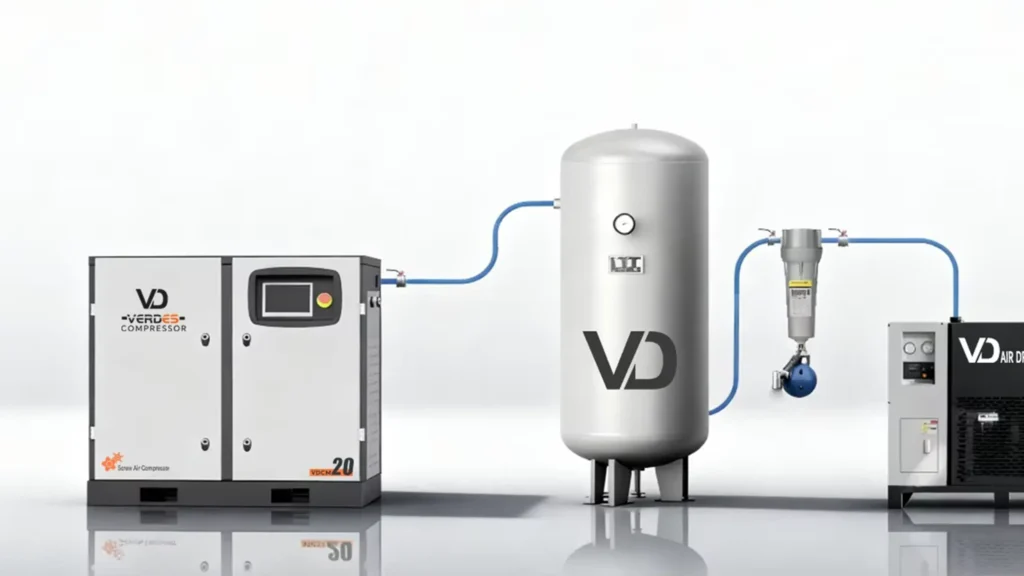
Installing an industrial air compressor is not just about placing the machine in the workshop and connecting a pipe. A reliable compressed air system depends on correct equipment positioning, proper piping design, safe electrical connection, clean drainage and stable airflow. This Industrial Air Compressor Installation Guide explains the key steps to help factories build a safer, more efficient and longer-lasting compressed air system.
1. Prepare the Installation Area
Before installing the compressor, choose a clean, dry and well-ventilated area. Industrial air compressors generate heat during operation, so enough space should be kept around the machine for cooling, inspection and maintenance.
Avoid placing the compressor in areas with excessive dust, high humidity, corrosive gas or direct rain exposure. Poor installation conditions may increase the risk of overheating, oil contamination, pressure loss and frequent maintenance.
For most screw air compressor systems, the installation area should allow easy access to:
- Compressor control panel
- Air receiver tank
- Refrigerated air dryer
- Precision filters
- Drain valves
- Electrical cabinet
- Maintenance doors
A stable foundation is also important. The floor should be flat and strong enough to support the full weight of the compressor and auxiliary equipment.
2. Confirm the Correct System Flow
A standard industrial compressed air system usually follows this layout:
Air Compressor → Air Receiver Tank → Pre-filter → Air Dryer → After-filter → Air Pipeline → Production Equipment
This sequence helps stabilize pressure, remove moisture and protect downstream equipment. The air receiver tank reduces pressure fluctuation, the dryer removes water vapor, and the filters help remove oil mist, dust and impurities.
For applications such as CNC machining, laser cutting, packaging machinery, woodworking equipment or pneumatic tools, clean and stable compressed air is essential for consistent production quality.
3. Install the Air Piping Correctly
Air piping is one of the most important parts of the installation. A poor piping layout can cause pressure drop, air leakage, water accumulation and unstable air supply.
When installing compressed air pipes, keep the pipeline as short and straight as possible. Avoid unnecessary elbows and sharp turns. The pipe diameter should match the compressor capacity and factory air demand. If the pipe is too small, the system may lose pressure and consume more energy.
The main pipeline should have a slight slope to guide condensate toward drain points. Branch lines should be connected from the top of the main pipe to reduce water entering production equipment.
Common pipe materials include aluminum alloy pipe, galvanized steel pipe and stainless steel pipe. For modern factories, aluminum compressed air piping is often preferred because it is lightweight, clean and easy to install.
4. Connect the Air Receiver Tank
The air receiver tank plays an important role in pressure stabilization. It stores compressed air and helps reduce frequent loading and unloading of the compressor.
During installation, make sure the air receiver is placed after the compressor and before the dryer. The tank should be equipped with a pressure gauge, safety valve and drain valve. Regular drainage is necessary because condensate will collect inside the tank during operation.
Automatic drains are recommended for factories that run continuously, as they reduce manual work and help prevent water buildup.
5. Install the Air Dryer and Filters
Moisture is one of the biggest problems in compressed air systems. If water enters production equipment, it may cause rust, product defects, valve failure or unstable machine operation.
A refrigerated air dryer helps remove moisture from compressed air by cooling the air and separating condensate. For applications that require higher air quality, precision filters should be installed before and after the dryer.
The filter installation direction must follow the airflow arrow on the filter housing. Installing filters in the wrong direction will reduce filtration efficiency and may damage the system.
6. Check Electrical and Safety Requirements
Electrical installation should be completed by qualified personnel. Before powering on the compressor, confirm that the voltage, phase and cable size match the compressor requirements.
The system should have proper grounding protection and overload protection. Emergency stop buttons, safety valves and pressure control devices must be checked before operation.
Never start the compressor before confirming that all pipes, valves and electrical connections are installed correctly.
7. Test the System Before Production
After installation, run a full system inspection before connecting the compressor to production equipment.
Check the following points:
- Pipeline connection is tight
- No visible air leakage
- Drain valves work properly
- Air dryer starts normally
- Filters are installed correctly
- Pressure rises smoothly
- Compressor temperature is normal
- Air pressure meets production demand
A leak test is especially important. Even small air leaks can waste energy and increase electricity costs over time.
8. Keep Maintenance Space and Records
Good installation also makes future maintenance easier. Leave enough space around each machine for filter replacement, oil change, belt inspection, dryer maintenance and tank inspection.
Factories should also keep installation records, including compressor model, working pressure, pipe size, dryer capacity and filter configuration. These records help engineers troubleshoot problems faster and plan future system upgrades.
Conclusion
A professional industrial air compressor installation can improve air supply stability, reduce energy waste and extend the service life of the whole compressed air system. From compressor placement to piping layout, air receiver connection, dryer installation and safety testing, every step affects the final performance.
If your factory is planning to install or upgrade an air compressor system, choosing the right layout and configuration is just as important as choosing the compressor itself.
Need help selecting the right compressor system for your factory? Contact VERDES for a professional compressed air solution.