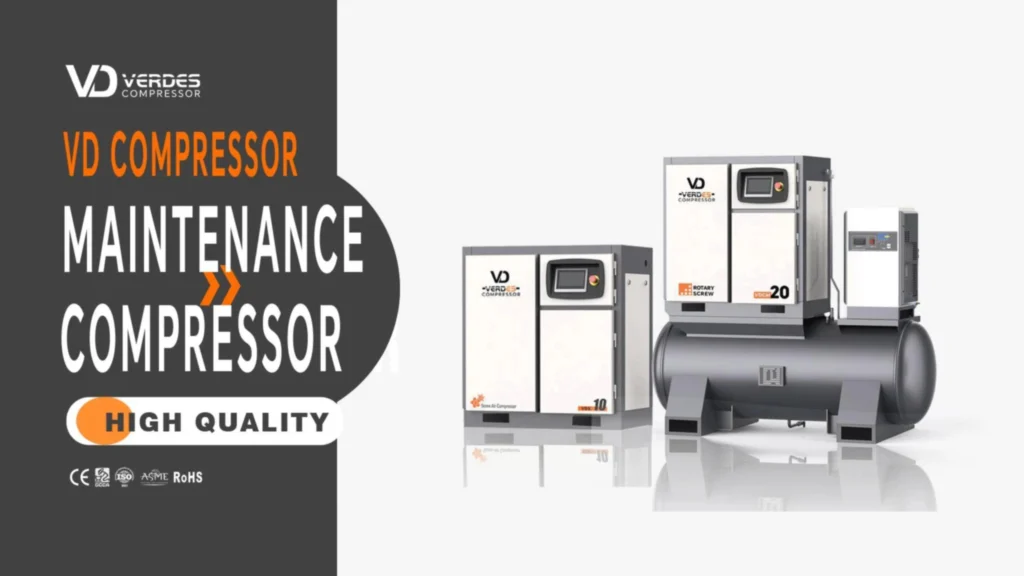
Air compressors are essential equipment in many industrial environments, powering tools, production lines, and automation systems. However, without proper maintenance, even the most reliable air compressor can suffer from reduced efficiency, unexpected downtime, and costly repairs.
A well-planned air compressor maintenance routine ensures stable performance, improves energy efficiency, and significantly extends the service life of the equipment. In this guide, we provide a comprehensive air compressor maintenance checklist covering daily, weekly, monthly, and scheduled maintenance tasks to help keep your compressor system operating at peak performance.
Why Air Compressor Maintenance Is Important
Regular maintenance is essential for keeping an air compressor system reliable and efficient. Industrial compressors operate under continuous load, high pressure, and varying environmental conditions. Without proper care, internal components may wear prematurely or fail unexpectedly.
Proper maintenance provides several key benefits:
- Extends equipment lifespan by preventing excessive wear on internal components
- Improves energy efficiency by ensuring optimal airflow and lubrication
- Reduces downtime caused by unexpected mechanical failures
- Maintains stable air pressure for consistent industrial processes
- Protects downstream equipment such as air dryers, filters, and pneumatic tools
For businesses that rely heavily on compressed air systems, preventive maintenance is far more cost-effective than emergency repairs.
Air Compressor Maintenance Checklist
A structured maintenance schedule helps ensure that critical components are inspected and serviced regularly. The following checklist outlines the recommended maintenance intervals for most industrial air compressors.
| Maintenance Task | Recommended Frequency |
|---|---|
| Check compressor oil level | Daily |
| Drain condensate from air tank | Daily |
| Inspect system pressure and temperature | Daily |
| Inspect air filters | Weekly |
| Check for air leaks | Weekly |
| Inspect belts and couplings | Monthly |
| Clean cooling system and radiator | Monthly |
| Replace oil filter | Every 3000 hours |
| Replace air filter | Every 3000 hours |
| Replace compressor oil | Every 3000 hours |
| Replace oil-air separator | Every 3000 hours |
| Inspect intake valve and safety valve | Every 4000 hours |
Maintenance intervals may vary depending on the compressor type, operating environment, and manufacturer recommendations.
Daily Air Compressor Maintenance Tasks
Daily inspection is the most important step in preventive maintenance. These quick checks can detect potential problems before they develop into serious failures.
1. Check Compressor Oil Level
Oil-lubricated compressors rely on proper lubrication to reduce friction and prevent overheating. Always verify that the oil level is within the recommended range.
Low oil levels can lead to:
- Excessive internal wear
- Increased operating temperature
- Reduced compressor lifespan
If oil levels are low, refill using the recommended compressor oil type specified by the manufacturer.
2. Drain Condensate from the Air Tank
Moisture naturally forms during air compression due to temperature changes. If condensate accumulates inside the air receiver tank, it can lead to corrosion and contamination in the air system.
Daily draining helps:
- Prevent rust inside the tank
- Maintain air quality
- Protect downstream equipment
Many modern systems use automatic drain valves to simplify this process.
3. Monitor Operating Pressure and Temperature
Abnormal pressure or temperature readings can indicate early signs of mechanical issues such as blocked filters, cooling problems, or airflow restrictions.
Operators should monitor:
- System pressure stability
- Oil temperature
- Discharge temperature
Sudden changes should be investigated immediately.
Weekly Air Compressor Maintenance Tasks
Weekly inspections focus on airflow, filtration, and system integrity.
Inspect Air Filters
Air filters protect the compressor from dust and contaminants entering the compression chamber. Dirty or clogged filters restrict airflow and force the compressor to work harder.
Consequences of clogged filters include:
- Higher energy consumption
- Reduced air output
- Increased internal temperature
Filters should be cleaned or replaced if they appear heavily contaminated.
Check for Air Leaks
Compressed air leaks are a common source of energy loss in industrial systems. Even small leaks can waste a significant amount of energy over time.
Common leak locations include:
- Pipe connections
- Hose fittings
- Valves
- Quick couplings
A simple leak detection method involves listening for hissing sounds or using ultrasonic leak detection tools.
Monthly Air Compressor Maintenance Tasks
Monthly maintenance ensures that mechanical components remain in good working condition.
Inspect Belts and Couplings
For belt-driven compressors, belt tension should be checked regularly. Loose belts can reduce transmission efficiency and increase wear.
Signs of belt problems include:
- Squealing noise during operation
- Reduced compressor speed
- Visible belt wear or cracking
Proper tension ensures efficient power transfer from the motor to the compressor.
Clean the Cooling System
Air compressors generate significant heat during operation. Cooling systems such as radiators, coolers, or ventilation ducts must remain clean to maintain proper temperature control.
Dust accumulation may cause:
- Overheating
- Reduced efficiency
- Automatic shutdowns
Cleaning cooling components helps maintain safe operating temperatures.
Scheduled Maintenance (2000–4000 Hours)
Some maintenance tasks are based on operating hours rather than calendar time.
These include:
- Replacing compressor oil
- Changing oil filters
- Replacing air filters
- Inspecting internal valves
- Checking safety valves and pressure regulators
High-quality lubricants and genuine replacement parts are recommended to ensure optimal performance and reliability.
Common Air Compressor Maintenance Mistakes
Even when maintenance is performed regularly, certain mistakes can still shorten compressor lifespan.
Common issues include:
Using incorrect compressor oil
Different compressors require specific lubricant formulations. Using the wrong oil can cause poor lubrication and overheating.
Ignoring small air leaks
Minor leaks may appear harmless but can lead to significant energy losses over time.
Skipping filter replacements
Filters that are not replaced on schedule can allow contaminants into the compression chamber.
Preventive maintenance should always follow the manufacturer’s recommended service intervals.
Frequently Asked Questions
How often should an air compressor be serviced?
Basic inspections should be performed daily, while deeper maintenance tasks such as oil and filter replacement are typically required every 2000 to 4000 operating hours depending on the compressor model.
What happens if an air compressor is not maintained?
Poor maintenance can lead to overheating, reduced air pressure, increased energy consumption, and potential equipment failure.
How long can an industrial air compressor last?
With proper maintenance, high-quality industrial air compressors can operate reliably for 10 to 15 years or more.
Conclusion
A well-structured air compressor maintenance plan is essential for ensuring reliable performance, minimizing downtime, and improving overall system efficiency. By following a routine checklist that includes daily inspections, weekly checks, and scheduled servicing, businesses can significantly extend the lifespan of their compressor systems while reducing operating costs.
For industries that depend on continuous compressed air supply, preventive maintenance is not just recommended—it is essential.
Explore Reliable Industrial Air Compressors
If you are looking for high-efficiency compressed air solutions for your business, explore our range of industrial compressors designed for stable performance and energy efficiency.
👉 Internal Link Suggestions
- Screw Air Compressor Product Page
- Permanent Magnet VSD Screw Compressor
- 4-in-1 Integrated Screw Air Compressor
These systems are engineered for reliability, easy maintenance, and long service life in demanding industrial environments.