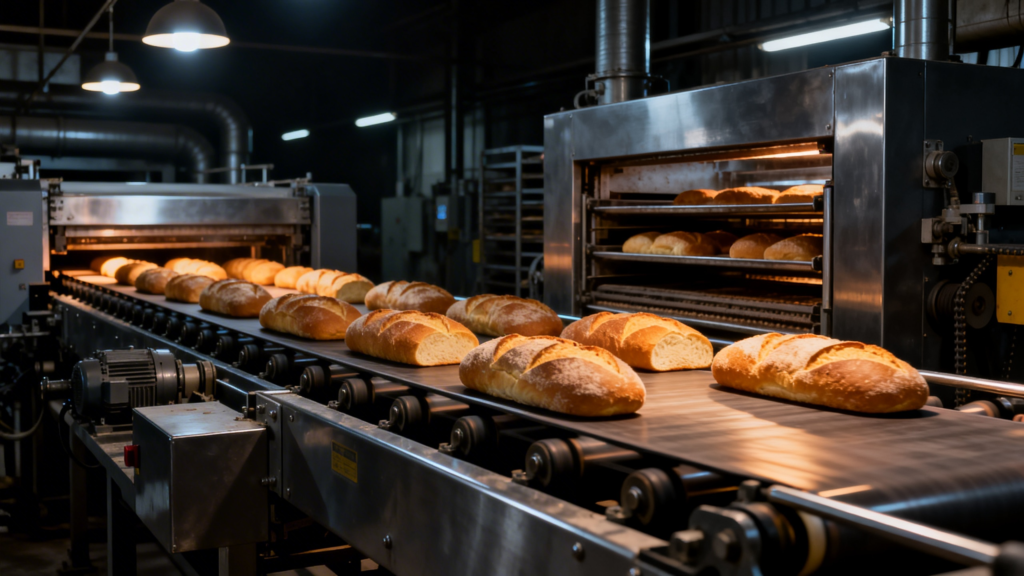
Selecting the right air compressor system for the food processing industry is crucial for ensuring product quality, operational efficiency, and regulatory compliance. The food industry relies heavily on compressed air systems to power machinery, control automation, and maintain the air quality needed to meet safety standards. Choosing the wrong compressor system can lead to increased costs, downtime, and potential safety risks. This article will guide you through the key factors to consider when choosing an air compressor system for food processing applications.
1. Introduction
Air compressors are essential to the smooth operation of food processing plants. They power pneumatic equipment, support packaging lines, assist in food handling, and help maintain cleanliness and air quality standards. With the critical role they play, selecting the correct compressor system is not only about ensuring the reliability of machinery but also about meeting food safety regulations. The right air compressor can improve operational efficiency, reduce energy consumption, and help maintain high-quality standards in food production.
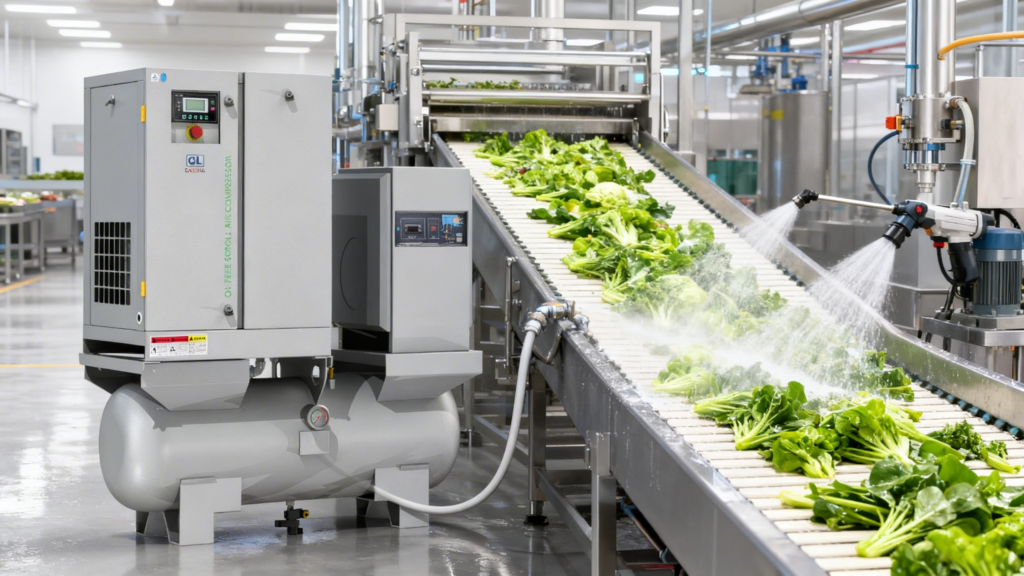
2. Understanding the Role of Air Compressors in the Food Processing Industry
In food processing, compressors are used in several essential ways:
- Powering Pneumatic Equipment: Many food processing machines, such as mixers, conveyors, and fillers, require compressed air to function.
- Assisting in Packaging: Compressors provide the necessary air to operate packaging machines, ensuring that food products are sealed correctly and safely.
- Controlling Automation: Compressed air is essential for controlling automated systems in production lines, ensuring consistent operation.
- Maintaining Clean Air: Clean, dry air is critical to preventing contamination during processing and packaging. This ensures that food products meet hygiene standards and are free from contaminants like oil or moisture.
Air compressors directly impact operational efficiency, production speed, and the safety of food products. Maintaining consistent air pressure and high air quality is crucial for meeting food safety standards such as HACCP (Hazard Analysis and Critical Control Points) and FDA regulations.
3. Key Factors to Consider When Choosing a Compressor Air System for Food Processing
Airflow Requirements (CFM)
Understanding the required airflow, measured in CFM (Cubic Feet per Minute), is critical for selecting the correct compressor. Airflow needs depend on the type of food processing machines used and the production scale. For example, packaging lines, mixing machines, and filling stations all have varying airflow requirements.
Overestimating or underestimating airflow needs can cause inefficiencies. A system that provides too little airflow will strain the compressor, while a system that provides too much airflow will incur unnecessary energy costs. Calculating the correct CFM is key to optimizing compressor performance and reducing energy consumption.
Pressure Requirements (PSI)
The pressure required for different types of food processing equipment can vary, with many operations requiring 90-120 PSI for optimal performance. The compressor must be capable of delivering consistent pressure to power machinery efficiently without causing issues like slow operation or incomplete tasks.
Pressure consistency is vital in maintaining product quality. Fluctuating air pressure can lead to defects, such as inconsistent sealing in packaging or incomplete mixing. Therefore, selecting a compressor that matches your required PSI range is crucial.
Energy Efficiency
Energy consumption is one of the highest operating costs in food processing, and compressors can consume a significant amount of energy. VSD (Variable Speed Drive) compressors are ideal for this industry because they adjust motor speeds based on air demand, reducing energy consumption during periods of lower usage.
Energy-efficient compressors help lower electricity bills, reduce environmental impact, and minimize wear and tear on the system, which can extend the lifespan of your equipment.
Explore our energy-efficient Oil-Free Compressors designed for food processing operations.
Air Quality (Dry and Clean Air)
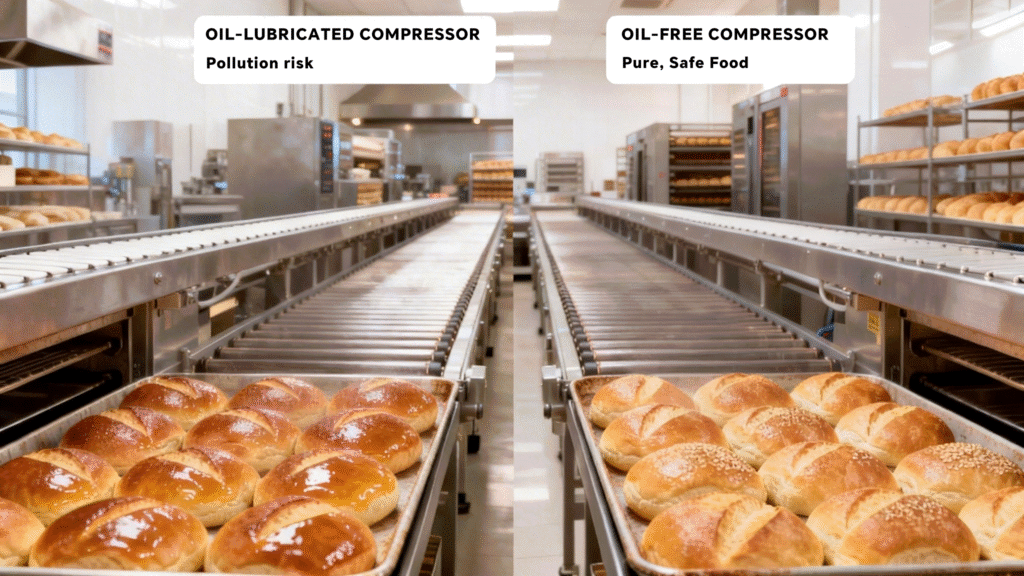
In food processing, especially in packaging and filling applications, ensuring that the air supplied is free from contaminants is crucial. Oil-free compressors are often required in food applications to avoid introducing oil or moisture into the air, which could affect product safety and quality.
Moisture, oil, or dirt particles can compromise food product integrity, leading to contamination. Compressors equipped with moisture traps, air dryers, and filters are essential for maintaining clean and dry compressed air in the food processing environment.
Regulatory Compliance
Food processing facilities must comply with strict regulations, including HACCP and FDA standards, which ensure that food products are processed and packaged in a hygienic environment. Using a compressor system that delivers clean, dry air and meets required safety standards is essential for compliance.
Some compressors also have certifications that align with these standards, which can help ensure that your facility meets regulatory requirements without complications.
4. Types of Compressors for Food Processing Applications
Choosing the right compressor depends on the size of the operation and specific air demands. Here’s a breakdown of the most common compressor types used in food processing:
Reciprocating Compressors (Piston Compressors)
Reciprocating compressors are commonly used in small to medium-sized food processing operations. They are cost-effective and simple, making them ideal for less demanding applications where air usage is moderate.
- Pros: Lower initial cost, simple maintenance, good for intermittent use.
- Cons: Noisy, less efficient at higher demands.
Screw Compressors (Rotary Screw Compressors)
Screw compressors are ideal for large-scale food processing plants that require continuous, high-volume air. These compressors are efficient, reliable, and perfect for 24/7 operations in large facilities.
- Pros: High efficiency, low maintenance, continuous operation, ideal for large-scale operations.
- Cons: Higher initial cost.
Oil-Free Compressors
Oil-free compressors are crucial for applications where air purity is vital, such as in packaging or filling operations. These compressors provide clean, dry air that prevents contamination of food products, ensuring they meet hygiene standards.
- Pros: Clean, dry air with no oil contamination.
- Cons: Higher initial investment and more complex maintenance.
Centrifugal Compressors
Centrifugal compressors are designed for high-flow applications where large volumes of air are required. They are often used in large food processing facilities that require continuous, high-pressure air.
- Pros: High capacity, low maintenance, energy-efficient.
- Cons: Expensive, best for large-scale industrial operations.
Discover our range of Oil-Free Compressors for clean air solutions in food production.
5. Matching the Right Compressor to Your Food Processing Setup
The size of your operation and specific air requirements determine which compressor type is best suited for your needs:
- For small-scale operations, a reciprocating compressor may be sufficient. It’s cost-effective and works well for less intensive tasks.
- For medium to large-scale operations, a screw compressor is typically the best choice. It provides continuous air supply with high efficiency and low maintenance.
- For applications requiring clean, dry air (such as packaging or filling), an oil-free compressor is essential for ensuring the safety and integrity of food products.
6. Ensuring Proper Maintenance for Long-Term Performance
Proper maintenance is critical to maximizing the life and efficiency of your compressor. Regular maintenance should include:
- Checking and replacing filters to prevent dirt and contaminants from entering the system.
- Monitoring moisture traps and air dryers to ensure clean, dry air.
- Regularly inspecting and cleaning the system to avoid costly downtime.
Implementing a proactive maintenance routine will ensure that your compressor operates at peak performance and reduces the risk of unexpected failures.
7. Common Mistakes to Avoid When Selecting an Air Compressor for Food Processing
- Undersizing the Compressor: Choosing a compressor with insufficient airflow or pressure can lead to inefficiency and machine malfunction.
- Neglecting Air Quality: Failing to ensure oil-free air can lead to contamination in food products, resulting in safety issues.
- Overestimating Air Demand: Opting for a compressor that is too large for your needs will lead to higher energy costs and unnecessary expenses.
- Neglecting Long-Term Maintenance: Failing to maintain the system will cause it to wear down prematurely, leading to operational failures.
8. Conclusion
Selecting the right air compressor system for food processing operations is essential to ensuring efficiency, food safety, and regulatory compliance. By considering key factors such as airflow, pressure, air quality, and energy efficiency, you can choose a compressor that best meets your operational needs.
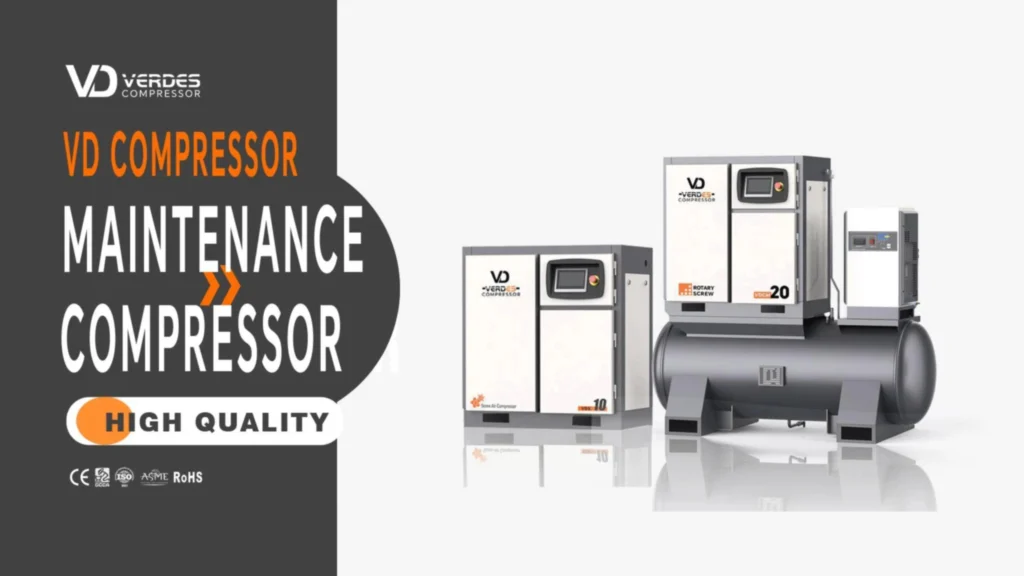
At VD Compressor, we offer a range of compressors designed specifically for food processing applications. Whether you’re looking for energy-efficient screw compressors or oil-free systems for packaging, our experts can help you select the right solution for your operation.
Explore our Product Catalog for more air compressor solutions.