
In the medical industry, ensuring clean, dry, and oil-free air is critical to patient safety and equipment reliability. Medical compressors are used to power vital devices like ventilators, anesthesia machines, and medical gas systems. Choosing the right compressor is essential not only for operational efficiency but also for maintaining compliance with stringent healthcare regulations. Among the various types of compressors, oil-free air compressors are the preferred choice for most medical applications due to their ability to provide clean, contaminant-free air. This article explores the key considerations when selecting an air compressor system for the medical industry, with a particular focus on the benefits of oil-free air compressors.
1. Introduction
Air compressors are integral to the smooth functioning of healthcare environments. They provide essential air supply for life-supporting equipment, respiratory therapy, and medical gas systems. However, the air supplied by these systems must meet the highest standards of cleanliness and purity. Oil-free air compressors are essential in achieving this goal, as they eliminate the risk of oil contamination, ensuring that the air delivered is safe for both patients and medical equipment.
When selecting an air compressor for medical applications, several factors must be considered, including air quality, energy efficiency, and regulatory compliance. In this article, we will dive into the critical aspects of choosing an air compressor for the medical industry, highlighting the advantages of oil-free compressors while comparing them with other types of compressors.
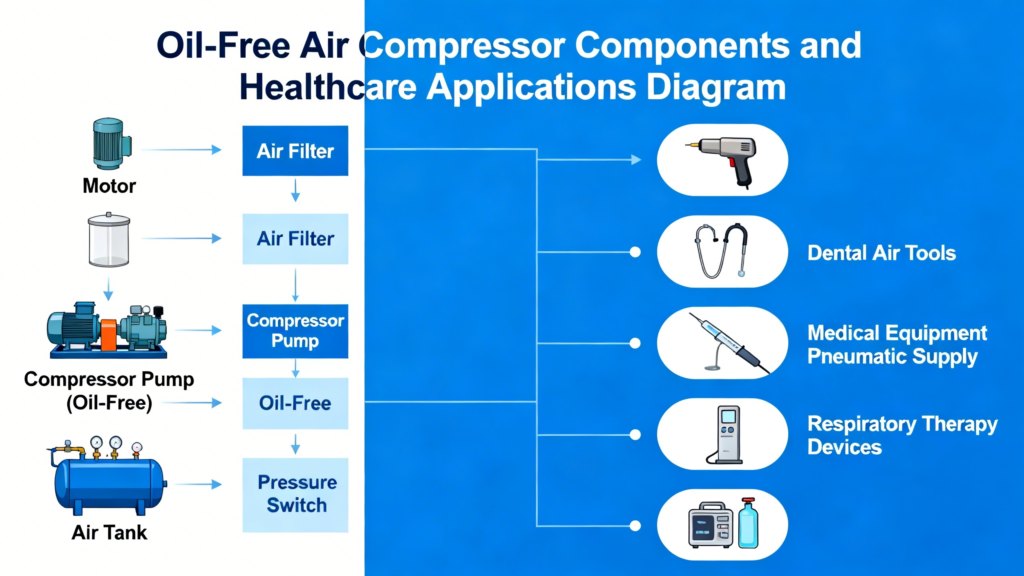
2. Understanding the Role of Oil-Free Air Compressors in the Medical Industry
Oil-free air compressors are specifically designed to eliminate the risk of oil contamination, making them the ideal choice for medical applications. These compressors are commonly used in hospitals, clinics, dental offices, laboratories, and research facilities.
Key Applications of Oil-Free Air Compressors in Healthcare:
- Ventilators and Respirators: Deliver life-sustaining air to patients, especially in critical care units and during surgery.
- Anesthesia Machines: Provide controlled, purified air for anesthesia delivery.
- Medical Gas Systems: Supply oxygen, compressed air, and other medical gases to various hospital departments.
- Laboratories and Diagnostic Equipment: Used in laboratories that require highly pure air for diagnostics, research, and medical testing.
The reliability of oil-free compressors ensures that these essential systems perform at their best, with minimal risk of contamination.
3. Key Benefits of Oil-Free Air Compressors for Medical Applications
Ensuring Clean, Contaminant-Free Air
The primary benefit of oil-free air compressors is their ability to produce clean, dry, and contaminant-free air. In medical settings, any oil or particulate contamination in the air could compromise patient safety and the functionality of medical devices. Oil-free compressors eliminate the need for oil in the compression process, ensuring that the air remains free from harmful substances.
- Why It Matters: Contaminants in medical air can cause medical equipment to malfunction, leading to risks such as respiratory distress or inaccurate diagnoses.
Compliance with Medical Standards
Oil-free compressors are crucial for meeting healthcare regulations. Standards such as ISO 8573 (air quality standards for compressors) and FDA guidelines mandate that the air used in medical equipment must be oil-free and meet certain purity standards.
- Why It Matters: Compliance with these standards ensures that healthcare providers meet safety requirements and avoid legal or regulatory issues.
Improved Equipment Longevity
Using oil-free compressors also prolongs the lifespan of sensitive medical equipment. Since there is no oil contamination, components such as air filters and pneumatic systems remain clean, reducing the wear and tear on machines and improving their longevity.
Energy Efficiency
Oil-free compressors equipped with Variable Speed Drive (VSD) technology adjust their motor speed based on demand. This helps reduce energy consumption during periods of low demand, making them energy-efficient and cost-effective, which is crucial in hospitals and large medical facilities where equipment operates continuously.
4. Other Compressor Types for Medical Applications: A Comparison
While oil-free air compressors are ideal for many medical applications, it’s important to compare them with other types of compressors to understand their specific advantages.
Oil-Lubricated Compressors
- Pros: Lower initial cost, higher air output, and versatility for non-medical applications
- Cons: Oil contamination risk, higher maintenance due to oil changes, and the need for additional filtration in medical applications
- Why They’re Less Suitable for Medical Applications: Oil-lubricated compressors pose a significant risk of contamination, which is unacceptable in medical environments that require clean and safe air.
Piston (Reciprocating) Oil-Free Compressors
- Pros: Cost-effective, reliable for intermittent use, easy maintenance
- Cons: Noisy, less efficient for continuous high-demand applications
- Ideal Use: Small medical practices, dental offices, or other applications with less frequent air demand
- Why They Work: Provide reliable air for small-scale, low-duty cycles, but not recommended for high-demand, continuous use.
Rotary Screw Oil-Free Compressors
- Pros: Continuous, reliable airflow, low maintenance, energy-efficient
- Cons: Higher initial investment
- Ideal Use: Large hospitals, operating rooms, laboratories, and healthcare facilities that require a steady and continuous supply of air
- Why They Work: Oil-free rotary screw compressors are ideal for providing consistent, high-quality air for critical healthcare applications.
Scroll Oil-Free Compressors
- Pros: Quiet operation, compact design, ideal for small to medium applications
- Cons: Higher initial cost than piston compressors
- Ideal Use: Clinics, diagnostic centers, and smaller healthcare practices
- Why They Work: Ideal for quieter environments and spaces with limited room while ensuring oil-free air supply.
Centrifugal Oil-Free Compressors
- Pros: High capacity, energy-efficient for large-scale operations
- Cons: High upfront cost, best for large applications
- Ideal Use: Large hospitals, multi-building healthcare facilities, or research labs
- Why They Work: Perfect for environments with high-demand air requirements that require consistent, reliable, and clean air.
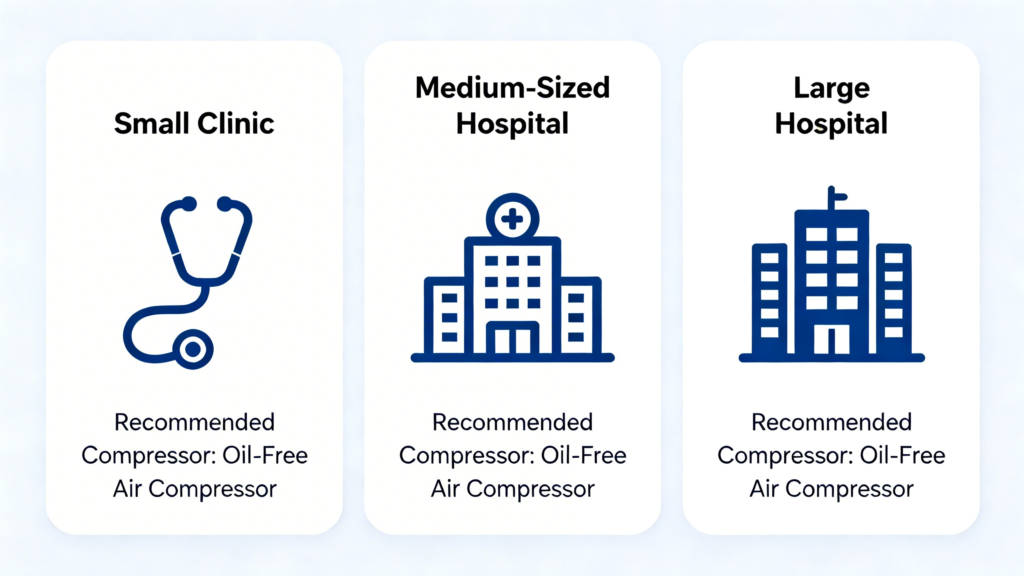
5. Matching the Right Oil-Free Compressor to Your Medical Application
The type of compressor you choose depends on your specific medical needs:
- Small Healthcare Facilities: Piston oil-free compressors or scroll compressors are perfect for smaller applications with intermittent use.
- Medium-Sized Healthcare Facilities: Rotary screw oil-free compressors provide reliable air for ongoing operations, ensuring continuous supply with low maintenance.
- Large Hospitals and Critical Care Environments: Oil-free rotary screw compressors or centrifugal compressors provide high-volume, consistent air supply for intensive care units, operating rooms, and emergency units.
Discover our full range of Oil-Free Compressors for Healthcare designed for continuous and reliable performance.
6. Ensuring Compliance with Healthcare Standards and Regulations
Oil-free air compressors meet rigorous standards for air quality in medical applications, including:
- ISO 8573: Ensures compliance with international standards for air quality.
- FDA and GMP Compliance: Ensures that the air used in medical devices meets regulatory standards and is safe for patient use.
Regular certification and maintenance are required to ensure that oil-free compressors continue to meet these standards and that air quality is consistently maintained.
7. Ensuring Proper Maintenance for Longevity and Performance
Regular maintenance is crucial to extend the life of oil-free compressors and maintain air quality. Key practices include:
- Replacing filters regularly to ensure clean, dry air is delivered
- Monitoring moisture levels and ensuring moisture traps are functional
- Performing routine inspections to check for any wear or damage to the compressor components
A proactive maintenance schedule will reduce downtime, improve system efficiency, and ensure compliance with healthcare regulations.
8. Common Mistakes to Avoid When Selecting Oil-Free Compressors for Medical Applications
- Undersizing the Compressor: Selecting a compressor that can’t meet your air demand will lead to inefficiency and possible failure of critical equipment.
- Neglecting Air Quality Needs: Oil-free compressors are essential for environments where contamination is unacceptable.
- Overestimating Air Demand: Over-sizing a compressor results in higher energy consumption and unnecessary operating costs.
- Neglecting Maintenance: Failing to regularly maintain your oil-free compressor can lead to decreased efficiency and increased operational risks.
9. Conclusion
Oil-free air compressors are the best solution for medical applications where clean, dry, and contaminant-free air is essential. They ensure that patient safety is maintained, medical equipment performs reliably, and healthcare providers comply with regulatory standards.
By considering factors such as air quality, airflow, pressure, and energy efficiency, you can select the right oil-free compressor for your medical facility. Whether you’re running a small clinic or a large hospital, the right air compressor will ensure the smooth and safe operation of your medical devices.
At VD Compressor, we offer a variety of oil-free compressors designed specifically for healthcare applications. Browse our products to find the perfect solution for your needs.
Explore our full Product Catalog for more air compressor options.