
In the electronics industry, maintaining the highest standards of air quality is essential to ensure the quality, performance, and reliability of sensitive components and devices. Air compressors are crucial in this environment, as they power tools, cool systems, and provide clean air for sensitive operations. Among the various types of compressors, oil-free air compressors are increasingly seen as the ideal solution due to their ability to deliver clean, dry, and contaminant-free air. This article explores the key factors you should consider when selecting a compressor for electronics applications, with a particular emphasis on the benefits of oil-free air compressors.
1. Introduction
In electronics manufacturing, compressed air plays a critical role in powering pneumatic tools, cleaning delicate components, and cooling systems. The air quality delivered by the compressor can directly affect the functionality of these processes. Contaminated air, particularly from oil-lubricated compressors, can damage sensitive electronics, lead to production defects, and compromise product quality. Therefore, selecting the right air compressor system is essential to maintaining the integrity of the production process and ensuring the reliability of your products.
This article discusses the key factors in choosing the right compressor for the electronics industry, and explains why oil-free air compressors are often the best choice for maintaining air purity and operational efficiency.
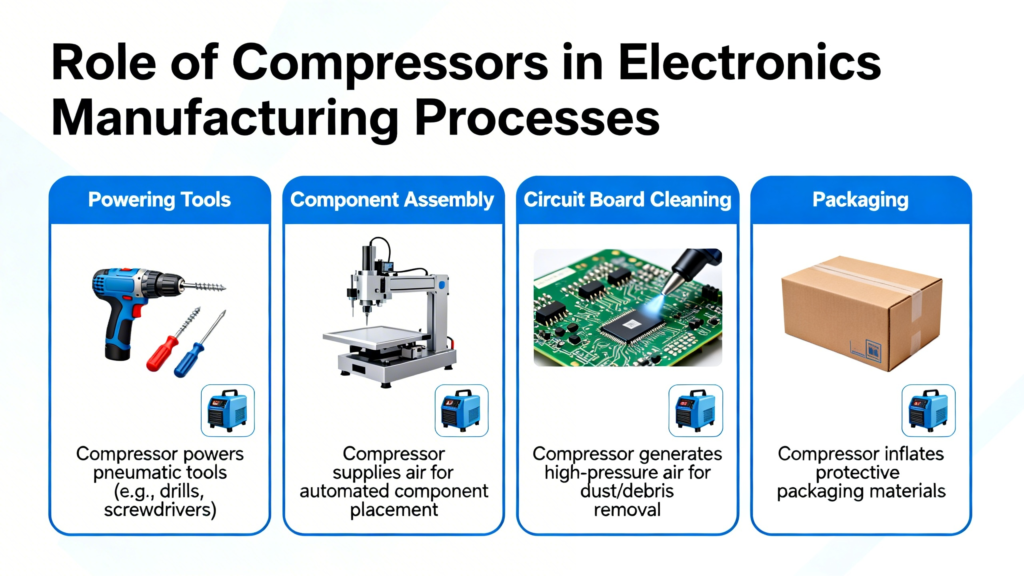
2. Understanding the Role of Air Compressors in the Electronics Industry
Air compressors in the electronics industry are responsible for a variety of crucial tasks:
- Powering Pneumatic Tools: Compressors provide the necessary air pressure to power pneumatic tools such as screwdrivers, drills, and pick-and-place machines used in assembly lines.
- Cleaning Electronic Components: Compressed air is used to blow off dust, particles, and debris from circuit boards and other sensitive components during assembly or before testing.
- Cooling Systems: Compressors help supply air to cooling systems that manage the heat generated during manufacturing processes, particularly in large-scale electronics production environments.
- Maintaining Cleanrooms: In the production of semiconductors and other sensitive electronics, oil-free air compressors are used to maintain the sterile environment in cleanrooms, preventing contamination from dust or oil particles.
Ensuring that the air used in these processes is clean and free of contaminants is critical to maintaining high-quality standards and product reliability.
3. Key Factors to Consider When Choosing a Compressor Air System for the Electronics Industry
Air Quality (Oil-Free and Clean Air)
The primary consideration when selecting a compressor for the electronics industry is air quality. Oil-free compressors are essential in environments where any contamination from oil particles can lead to defects or operational failure. Oil-free air compressors ensure that only clean, dry air is supplied to critical processes, safeguarding the production of sensitive electronics.
- Why Oil-Free Air Matters: Oil-free air prevents contamination of sensitive components like semiconductors, circuit boards, and display panels. Even the smallest particles of oil or moisture can cause short circuits, corrosion, or performance issues in electronics.
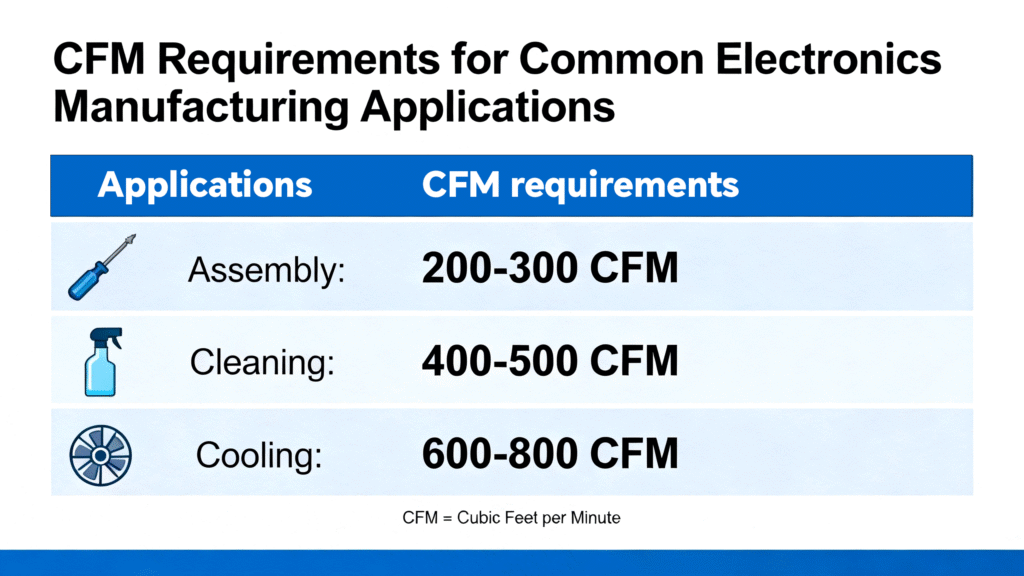
Airflow Requirements (CFM)
The CFM (Cubic Feet per Minute) requirement is another critical factor in selecting a compressor. The CFM required depends on the number of tools, equipment, and systems in operation. For example, a production line with multiple pneumatic tools or cleaning stations will need a higher CFM compared to smaller, less demanding applications.
It is important to calculate the total CFM needed to ensure the compressor can provide consistent airflow without overworking or underperforming, which can affect both efficiency and quality.
Pressure Requirements (PSI)
Different processes in electronics manufacturing require varying levels of air pressure. PSI (Pounds per Square Inch) typically ranges from 70 PSI to 150 PSI for most electronics applications. For instance, high-pressure air is required for cleaning components, while lower pressure is sufficient for powering smaller pneumatic tools.
Having a compressor that meets these pressure requirements ensures that equipment operates efficiently and consistently, avoiding interruptions in the production process.
Energy Efficiency
Energy consumption is a major factor in the long-term operational costs of a compressor system. Variable Speed Drive (VSD) compressors, particularly oil-free VSD compressors, are ideal for the electronics industry. They adjust motor speed based on real-time air demand, allowing for significant energy savings during periods of low air consumption.
Energy-efficient compressors reduce electricity costs and help meet sustainability goals, a growing concern in the electronics industry, where energy use can account for a significant portion of overhead costs.
Noise Levels
In electronics manufacturing facilities, especially those in close proximity to workers, noise reduction is important. Compressors, especially larger models, can generate significant noise that may affect worker productivity and comfort. Choosing a low-noise oil-free compressor helps maintain a quieter and more comfortable work environment.
Scroll compressors and rotary screw compressors are known for their quieter operation, making them ideal for noise-sensitive applications.
4. Types of Compressors for Electronics Applications
Reciprocating Compressors (Piston Compressors)
Piston compressors are typically used in small-scale electronics applications, such as small workshops, maintenance departments, or for powering light-duty tools. These compressors are cost-effective and offer simple maintenance but are generally noisier and less efficient for continuous use.
- Pros: Low initial cost, simple maintenance, ideal for intermittent use
- Cons: Noisy, inefficient for continuous operation, requires more frequent maintenance
Rotary Screw Compressors
Rotary screw compressors, particularly oil-free models, are the preferred choice for larger electronics manufacturing facilities with continuous air demand. These compressors are highly efficient, require low maintenance, and provide a steady, reliable supply of air, making them ideal for high-demand applications.
- Pros: Energy-efficient, low maintenance, continuous air supply, quieter operation
- Cons: Higher initial investment
Discover our full range of Oil-Free Compressors for high-demand electronics applications.
Oil-Free Compressors
Oil-free compressors are vital for electronics manufacturing, especially in cleanrooms or environments where air purity is crucial. These compressors provide clean, dry air, making them ideal for sensitive applications such as semiconductor manufacturing, PCB assembly, and display production.
- Pros: Clean, dry air, ideal for sensitive components, reduces contamination risks
- Cons: Higher upfront cost, more complex maintenance compared to piston compressors
Centrifugal Compressors
Centrifugal compressors are used for large-scale operations where massive air volumes are needed, such as in large electronics production plants or research facilities. These compressors are highly efficient for high-capacity applications and can support a wide range of demands.
- Pros: High capacity, energy-efficient, reliable for large-scale operations
- Cons: High upfront cost, best suited for large applications
5. Matching the Right Compressor to Your Electronics Application
- Small Electronics Workshops: Reciprocating compressors or small oil-free compressors are ideal for intermittent use and small-scale operations.
- Medium to Large Electronics Manufacturing Plants: Oil-free rotary screw compressors are the best choice for continuous, high-efficiency operations in large-scale facilities.
- Cleanrooms and Sensitive Operations: Oil-free compressors with high-quality filtration systems are crucial for maintaining purity in cleanrooms and environments that require contamination-free air.
- Cooling and Cleaning Systems: Choosing a compressor with high CFM and consistent PSI is essential for powering cooling and cleaning systems that support various electronics production processes.
6. Ensuring Compliance with Electronics Industry Standards
The electronics industry is governed by strict quality and safety standards. Oil-free compressors are often required to meet the ISO 8573 air quality standards, ensuring that the air delivered to sensitive equipment is free from contaminants like oil, moisture, and particles. Compliance with IPC standards for PCB manufacturing and other regulatory guidelines is crucial in maintaining quality and preventing defects.
7. Ensuring Proper Maintenance for Longevity and Performance
Proper maintenance is critical to ensuring that air compressors operate efficiently and reliably over the long term. This includes regular:
- Filter replacement: To ensure clean air is delivered consistently.
- Moisture control: Regular checks on moisture traps and air dryers to prevent contamination.
- Scheduled servicing: Inspections to ensure the compressor is running at optimal efficiency, extending its lifespan and preventing unexpected downtime.
8. Common Mistakes to Avoid When Selecting Air Compressors for Electronics Applications
- Undersizing the Compressor: Choosing a compressor with insufficient airflow or pressure for your application can lead to inefficiency and equipment failure.
- Neglecting Air Quality: Failing to select oil-free compressors for sensitive applications can lead to contamination and product defects.
- Overestimating Air Demand: Selecting an oversized compressor can lead to wasted energy and unnecessary costs.
- Neglecting Maintenance: Failing to keep up with regular maintenance can result in compressor failures, increased downtime, and higher operational costs.
9. Conclusion: Why Oil-Free Air Compressors are the Best Choice for the Electronics Industry
In conclusion, oil-free air compressors are the best solution for the electronics industry, where air quality, energy efficiency, and operational reliability are of utmost importance. These compressors provide clean, dry air that ensures the integrity of sensitive components, while also meeting stringent regulatory standards.
For electronics manufacturers and repair shops, investing in oil-free air compressors ensures high-quality production, compliance with industry standards, and a reduction in the risk of contamination. Oil-free compressors also offer long-term efficiency by reducing maintenance costs and ensuring a steady, reliable air supply.
At VD Compressor, we provide a range of oil-free compressors specifically designed to meet the needs of the electronics industry. Whether you are operating a small-scale workshop or a large manufacturing plant, we have the right solution to keep your systems running smoothly.
Explore our Oil-Free Air Compressors for the electronics industry.