Introduction
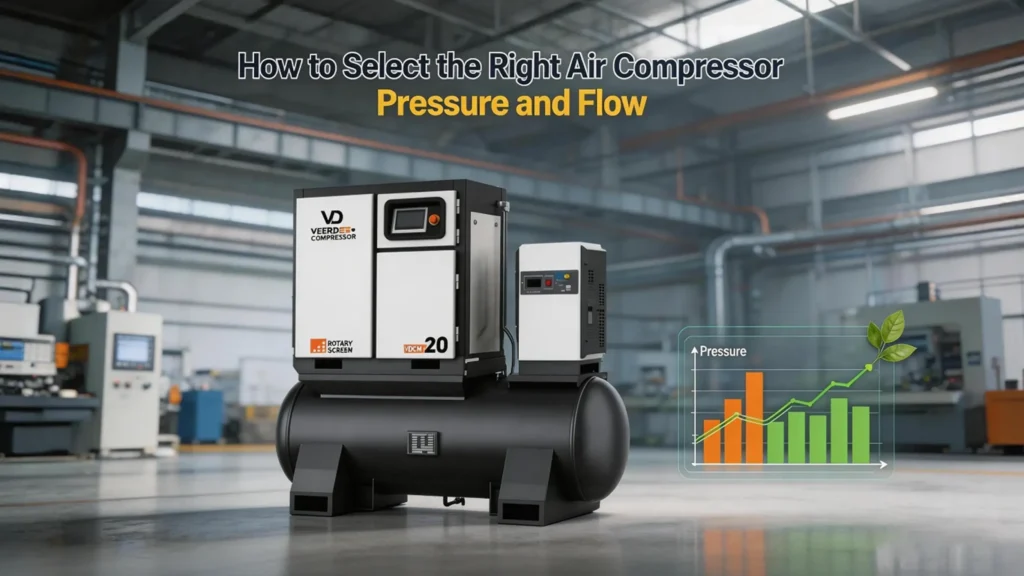
Air compressor pressure and flow selection directly affects system performance, energy consumption, and production stability. Different industries have very different requirements, and incorrect sizing often leads to inefficiency or insufficient air supply.
This guide explains how to select the right pressure and flow based on specific industry applications, helping you achieve reliable and cost-effective operation.
Understanding Pressure and Flow
Pressure is the force of compressed air, typically measured in bar or PSI. Flow is the volume of air delivered, measured in CFM or m³/min.
In air compressor pressure and flow selection, pressure determines whether equipment can operate properly, while flow determines how many machines can run at the same time. Both must be balanced for optimal performance.
Step 1: Select Pressure Based on Industry Requirements
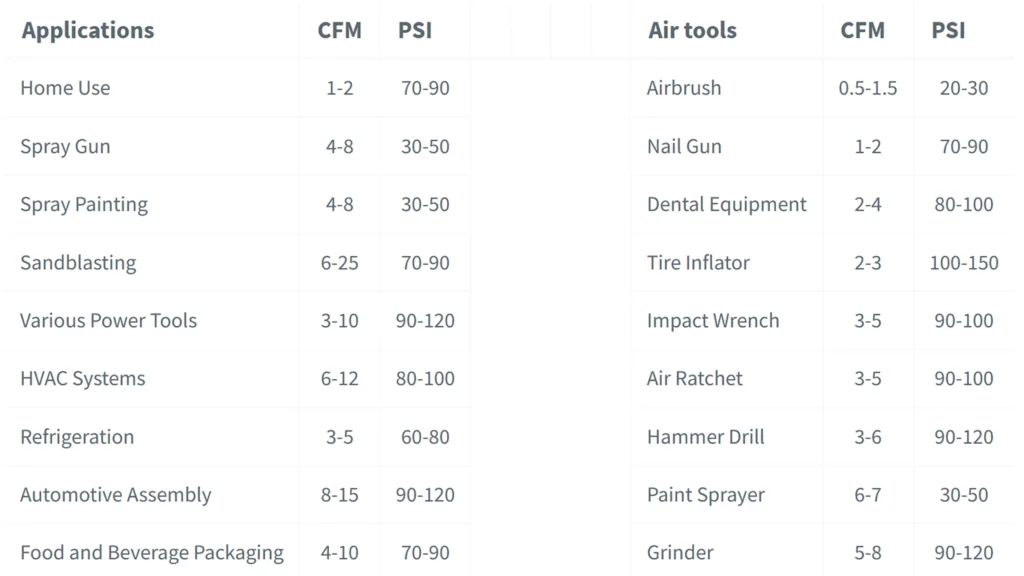
Different industries require different pressure levels. Selecting the correct pressure is the first step in air compressor pressure and flow selection.
Manufacturing Industry
Most general manufacturing equipment operates at 6–8 bar. Stability is more important than high pressure.
Laser Cutting Industry
Laser cutting requires higher and very stable pressure, typically 8–13 bar. Pressure fluctuation can directly affect cutting quality.
Automotive Repair Industry
Air tools usually require 6–8 bar, but demand is intermittent. Pressure stability during peak usage is important.
Textile and Food Industry
These industries require stable pressure with clean and dry air. Pressure is usually moderate, but consistency is critical.
In all cases, always select based on the highest pressure requirement among your equipment.
Additionally, consider system pressure loss caused by pipelines, filters, and dryers, typically 0.5–1.5 bar. Add a 10% safety margin to ensure stable output.
Step 2: Calculate Flow Based on Industry Usage
Flow demand varies significantly across industries and is a key part of air compressor pressure and flow selection.
Continuous Production (Manufacturing / Laser Cutting)
These applications require continuous airflow. Total flow should be calculated based on all running equipment simultaneously.
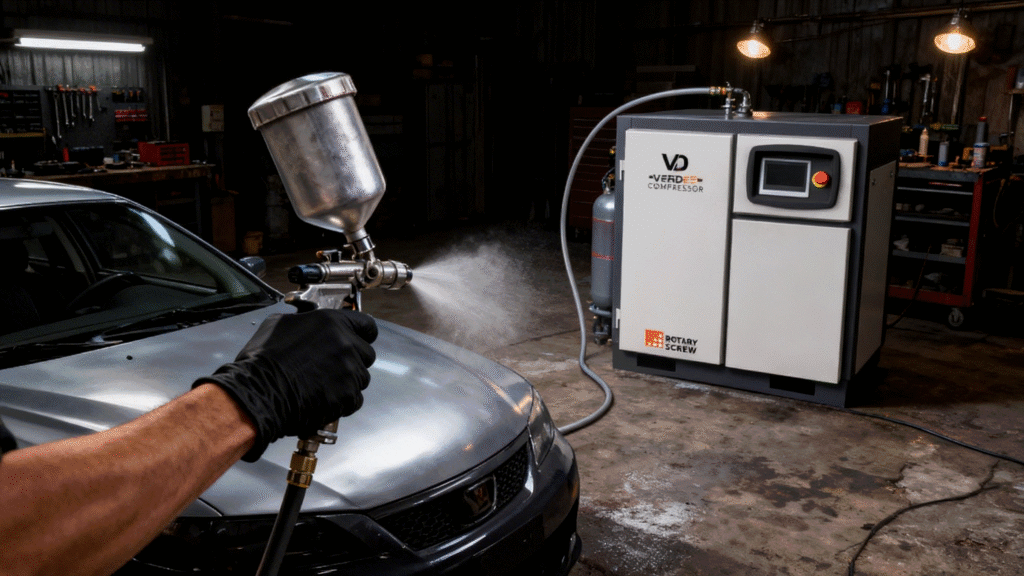
Intermittent Usage (Automotive Repair)
Flow calculation should consider peak usage rather than total installed tools. Not all equipment runs at the same time.
High Precision Industry (Food / Textile)
Flow must remain stable to ensure product quality. Sudden drops in airflow can affect the production process.
To ensure accurate air compressor pressure and flow selection, always:
- Sum actual air consumption
- Apply a simultaneous usage factor
- Add 10–20% extra capacity for leakage and future expansion
Common Mistakes
Many users make mistakes during air compressor pressure and flow selection that reduce efficiency:
- Selecting higher pressure than required, increasing energy costs
- Ignoring pipeline and system losses
- Underestimating peak airflow demand
- Failing to consider future expansion
Avoiding these issues improves system reliability and reduces long-term costs.
Conclusion
Accurate air compressor pressure and flow selection depends on understanding industry-specific requirements and real usage conditions. By selecting pressure based on equipment needs and calculating flow based on actual demand, you can ensure stable performance, energy efficiency, and long-term reliability.
Explore our Air Compressors for the yours industry.