
Choosing the right air compressor system for your car repair workshop is essential to ensuring optimal performance, improving efficiency, and minimizing operating costs. Air compressors in car repair applications are used for a wide range of tasks, from powering pneumatic tools like impact wrenches and grinders to performing precision work such as painting and cleaning. In this article, we’ll explore the key factors to consider when selecting an air compressor, including airflow, pressure requirements, energy efficiency, and air quality, while highlighting the importance of matching the right system to your specific needs.
1. Introduction
In any car repair workshop, an efficient air compressor system is essential for powering tools, assisting with cleaning tasks, and even supporting processes like painting and surface preparation. However, choosing the right compressor can be a daunting task. If you choose the wrong system, it can lead to inefficient operations, higher energy bills, or even damage to expensive equipment.
Selecting the right compressor involves evaluating several factors, such as airflow (CFM), pressure (PSI), energy consumption, air quality, and noise levels. These factors directly impact the efficiency, safety, and overall success of your workshop. Let’s dive deeper into each of these considerations to help you make an informed choice.
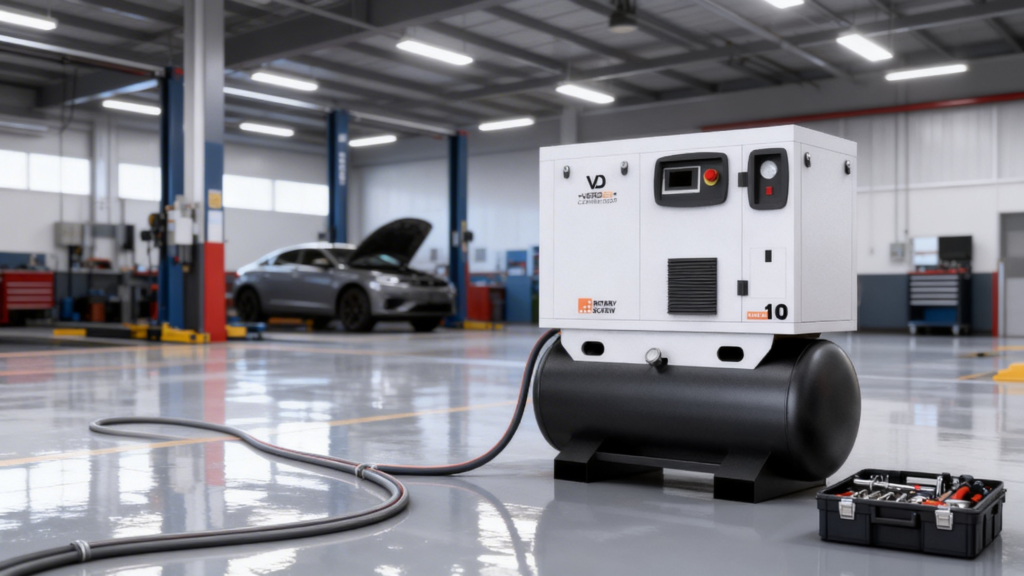
2. Understanding the Role of Air Compressors in Car Repair Workshops
Air compressors are the heart of many car repair tasks, from routine maintenance to detailed bodywork. These tasks include:
- Powering Pneumatic Tools: Air compressors provide the necessary power for essential tools like impact wrenches, grinders, and drills.
- Painting and Surface Preparation: For tasks like spray painting, an oil-free air compressor is required to avoid contamination and ensure smooth, high-quality finishes.
- Cleaning: Compressed air is often used for cleaning parts, engines, or even surfaces in the workshop.
- Inflating Tires: Compressors are also critical for inflating tires during car maintenance and repairs.
The air compressor plays an essential role in ensuring that tools run smoothly, work is completed efficiently, and the environment remains clean and safe.
3. Key Factors to Consider When Choosing a Compressor Air System for Car Repair Workshops
Airflow Requirements (CFM)
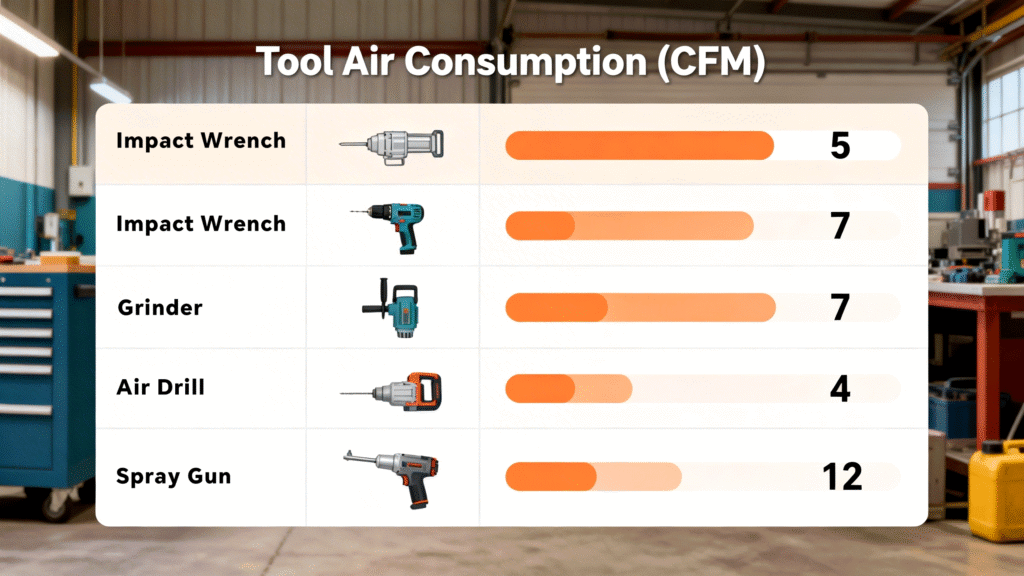
One of the most critical aspects of compressor selection is airflow, which is measured in CFM (Cubic Feet per Minute). Airflow requirements depend on the number and type of tools used in the workshop and how frequently they are used. For instance, heavy-duty tools such as impact wrenches or grinders require higher airflow than lighter tools.
To calculate the required CFM, consider the total number of tools operating at the same time and their individual airflow requirements. Choosing a compressor with too little airflow will result in suboptimal performance, while choosing one with excessive airflow will lead to wasted energy and unnecessary operating costs.
Pressure Requirements (PSI)
Air pressure, measured in PSI (Pounds per Square Inch), determines the force at which the air is delivered. Different tools and processes in a car repair workshop have specific PSI requirements. Pneumatic tools typically require between 90-150 PSI, depending on their power needs. For instance, impact wrenches usually require about 90 PSI, while spray guns may require slightly higher pressure.
Choosing the correct pressure ensures consistent performance and avoids damage to tools. Pressure drops can result in inefficient operations, leading to longer completion times and possible damage to your equipment.
Energy Efficiency
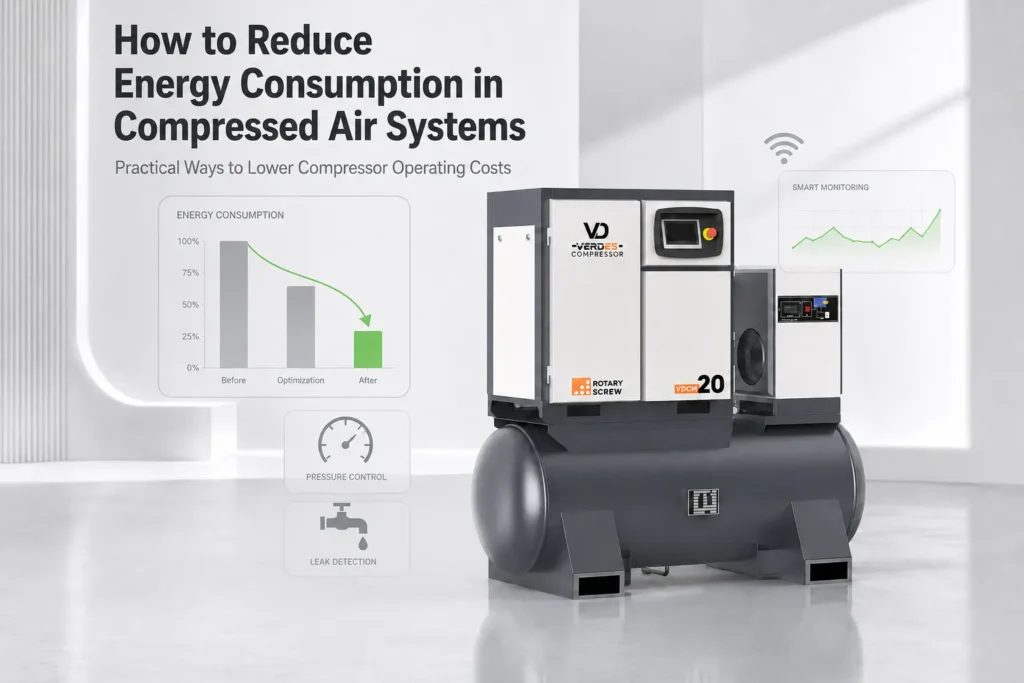
Energy costs are one of the most significant ongoing expenses for car repair workshops. Compressors are used extensively in a workshop, so energy efficiency is essential to minimizing costs. VSD (Variable Speed Drive) compressors can adjust motor speeds based on the air demand, ensuring that energy is only used when necessary, significantly reducing electricity bills.
When selecting a compressor, consider the total cost of ownership, which includes not just the initial purchase price, but also the energy consumption and maintenance costs over the unit’s lifetime.
Learn more about our Energy-Efficient VSD Compressors designed to reduce operating costs in your workshop.
Air Quality
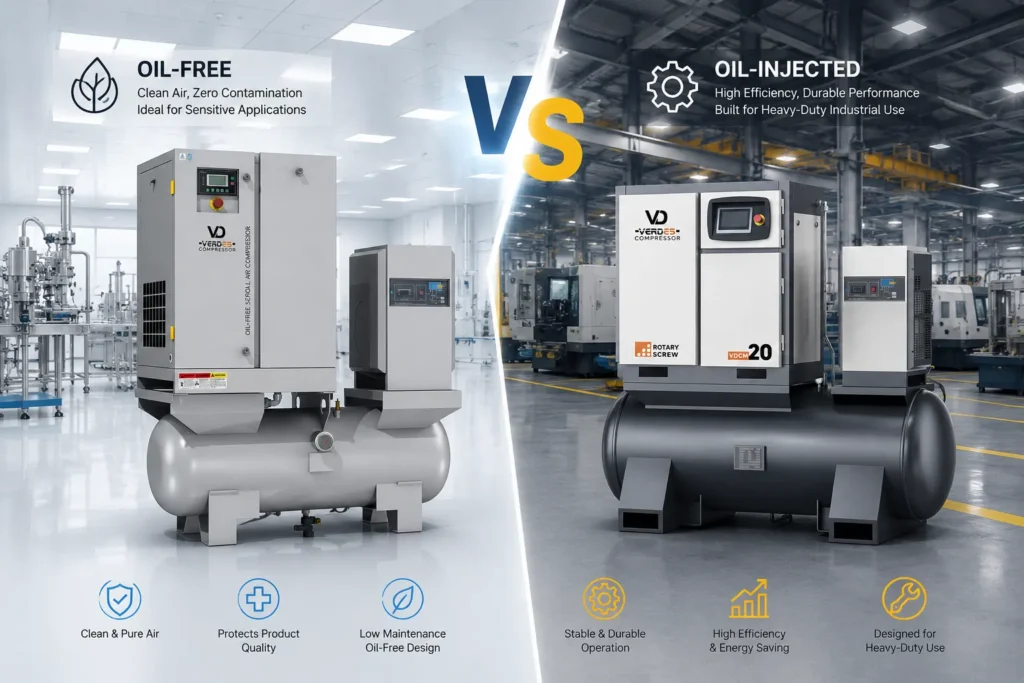
The quality of the compressed air is crucial, especially for sensitive tasks such as painting or working with pneumatic tools that require clean, dry air. Oil-free compressors are essential for applications where contamination could affect the quality of the work, such as painting or applying finishes.
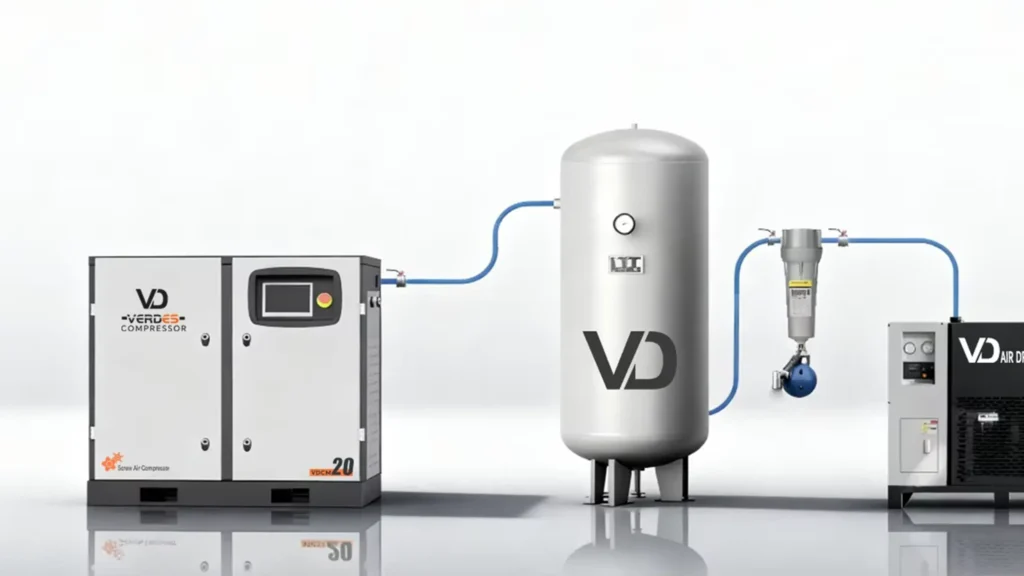
Air compressors with integrated moisture traps and filters help ensure that the air delivered is clean, dry, and free from contaminants like oil or dust. Maintaining air quality is critical for maintaining tool performance and ensuring the safety and quality of the finished product.
Image Suggestion: Visual showing the difference between oil-free and oil-lubricated compressors, highlighting air quality benefits for painting applications.
Noise Level
Noise is a major concern in a busy car repair workshop, where compressors can operate for long hours. Choosing a quiet compressor is vital to maintaining a comfortable and safe work environment. Look for compressors with soundproof casings or those designed to run at lower noise levels.
A quieter compressor not only improves workplace comfort but can also comply with local noise regulations in residential or urban areas. Many modern screw compressors are designed to run quietly and efficiently, making them ideal for workshops where noise reduction is a priority.
4. Types of Compressors for Car Repair Workshops
Reciprocating Compressors (Piston Compressors)
These compressors are ideal for smaller workshops or garages with low to moderate air demand. They are cost-effective and easy to maintain, making them suitable for intermittent use, but they can be noisy and less efficient for continuous use.
- Pros: Low initial cost, simple maintenance, compact design
- Cons: Noisy, less efficient for continuous use, requires more frequent servicing
Screw Compressors (Rotary Screw Compressors)
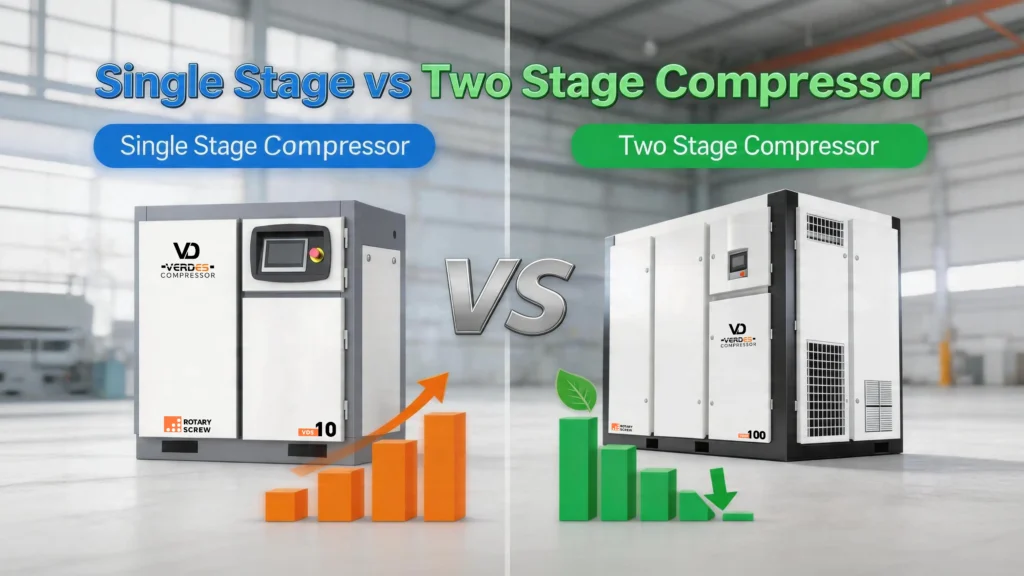
Screw compressors are a popular choice for medium to large workshops with consistent air demand. They are energy-efficient, provide steady airflow, and operate quietly.
- Pros: Reliable for continuous use, energy-efficient, low maintenance, quiet operation
- Cons: Higher initial cost, best suited for larger workshops with higher demands
Oil-Free Compressors
Oil-free compressors are essential for tasks that require contamination-free air, such as painting and air tool applications that require clean air.
- Pros: Clean, dry air, ideal for painting, no risk of oil contamination
- Cons: Higher initial investment, more complex maintenance
Portable Compressors
For mobile car repair businesses or outdoor service, portable compressors provide flexibility. These compact units are designed to be easily moved, ideal for repairs at different locations.
- Pros: Compact, easy to move, useful for remote jobs
- Cons: Limited power, best for light-duty applications
5. Matching the Right Compressor to Your Car Repair Workshop Needs
The compressor you choose should be based on the scale of your operations and your specific needs:
- Small Workshops: Reciprocating compressors may be sufficient for light-duty tasks or intermittent use.
- Medium to Large Workshops: Screw compressors are more suitable for higher demands and continuous use.
- Oil-Free Compressors: For tasks like painting or airbrushing, oil-free compressors are essential to maintain air quality.
- Portable Compressors: If you offer mobile car repair services, portable compressors provide flexibility for on-the-go repairs.
6. Ensuring Proper Maintenance for Long-Term Performance
Regular maintenance is key to keeping your compressor running smoothly. Here’s what should be done:
- Filter Replacement: Regularly clean or replace air filters to ensure maximum airflow and air quality.
- Moisture Traps: Check and maintain moisture traps to prevent water contamination in the air supply.
- Oil Changes (for oil-lubricated compressors): Keep track of oil levels and replace as needed to avoid system breakdowns.
A proactive maintenance schedule ensures your compressor runs efficiently, prolongs its lifespan, and minimizes downtime.
7. Common Mistakes to Avoid When Selecting Air Compressors for Car Repair Workshops
- Undersizing the Compressor: Selecting a compressor with insufficient capacity leads to inefficiency and tool underperformance.
- Ignoring Air Quality Needs: Failing to account for air quality requirements, especially for tasks like painting, can affect the quality of your work.
- Overestimating Air Demand: Over-sizing a compressor results in higher energy consumption and unnecessary costs.
- Neglecting Noise Levels: High noise levels can make the work environment uncomfortable and unsafe.
8. Conclusion
Choosing the right air compressor system for your car repair workshop is vital to maintaining productivity, reducing energy costs, and ensuring high-quality results. By considering factors like airflow, pressure, energy efficiency, and air quality, you can select the best compressor for your specific needs.
At VD Compressor, we offer a range of high-quality compressors designed for automotive applications. Whether you need a portable unit for mobile repairs or a powerful screw compressor for heavy-duty tasks, we have the right solution for your workshop.