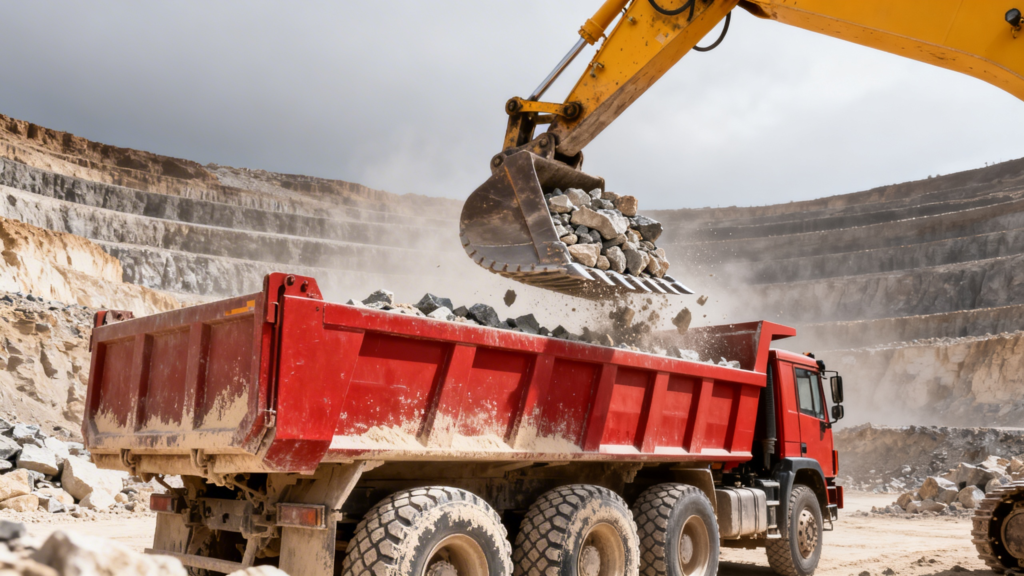
Choosing the right air compressor system for mining operations is crucial for ensuring optimal performance, safety, and cost-efficiency. Air compressors are used extensively in mining to power pneumatic tools, assist with ventilation, and facilitate material handling and processing. Given the demanding conditions and unique challenges of mining environments, selecting the correct compressor can have a significant impact on productivity, safety, and energy costs. This article will guide you through the factors to consider when choosing an air compressor for mining applications.
1. Introduction
In the mining industry, air compressors are essential to powering the machinery that drives daily operations. They support a range of tasks from drilling and blasting to ventilation and material handling. Whether you are working underground or on the surface, selecting the right air compressor system for your mining operation can help optimize productivity, improve worker safety, and reduce operational costs.
This guide provides the key considerations you should factor in when choosing a compressor for mining operations. We’ll discuss essential performance features, including airflow, pressure requirements, energy efficiency, and durability. Furthermore, we will explore the role of Diesel Air Compressors, which are indispensable in mobile and remote mining environments where electricity may not be available.
2. Understanding the Role of Air Compressors in the Mining Industry
Air compressors in mining are integral to powering various equipment and processes. The compressed air they provide is essential for:
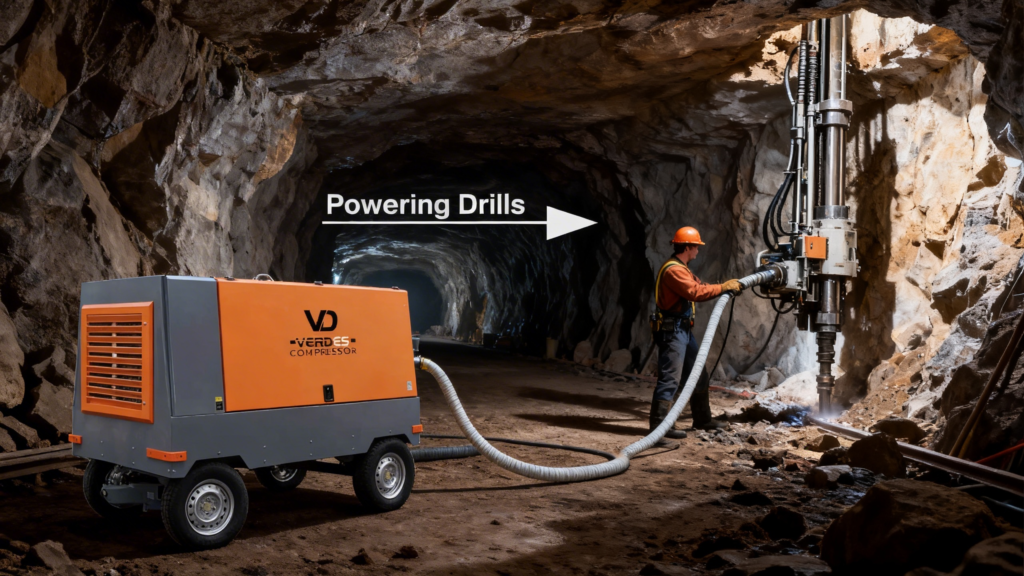
- Powering Pneumatic Tools: Tools such as drills, hoppers, and crushers require compressed air to operate efficiently.
- Ventilation: In underground mining, compressors help ventilate shafts and tunnels, ensuring breathable air for workers and helping to control harmful gases.
- Dust Suppression: Compressed air is used in dust suppression systems, ensuring safety by keeping particulate matter from contaminating the air.
- Automation and Processing: Many automated systems in mining operations rely on compressed air to control machines for material handling, sorting, and processing.
Given the variety of uses, the compressor must meet specific demands in terms of airflow, pressure, and reliability to ensure the smooth and safe operation of the mining process.
3. Key Factors to Consider When Choosing a Compressor Air System for Mining
Airflow Requirements (CFM)
The CFM (Cubic Feet per Minute) requirement is one of the most critical factors when selecting a compressor. In mining, air demand can vary significantly depending on the number and type of tools in use. Heavy-duty tools such as rock drills and pneumatic hammers require a compressor that can provide a higher CFM, while lighter tools require less airflow.
To ensure efficient operation, it’s important to calculate the total airflow required based on all tools and machinery operating simultaneously. Underestimating CFM needs can result in insufficient performance, while overestimating can lead to unnecessary energy costs.
Pressure Requirements (PSI)
Many mining tools, including drills and material handling equipment, require high PSI (Pounds per Square Inch) to perform optimally. Pressure consistency is essential to maintain the functionality of mining equipment, especially when working in harsh environments.
Typical PSI requirements in mining range from 90-150 PSI, depending on the equipment used. Choosing a compressor that meets these requirements ensures that tools perform at peak efficiency and reduces the risk of malfunction.
Energy Efficiency
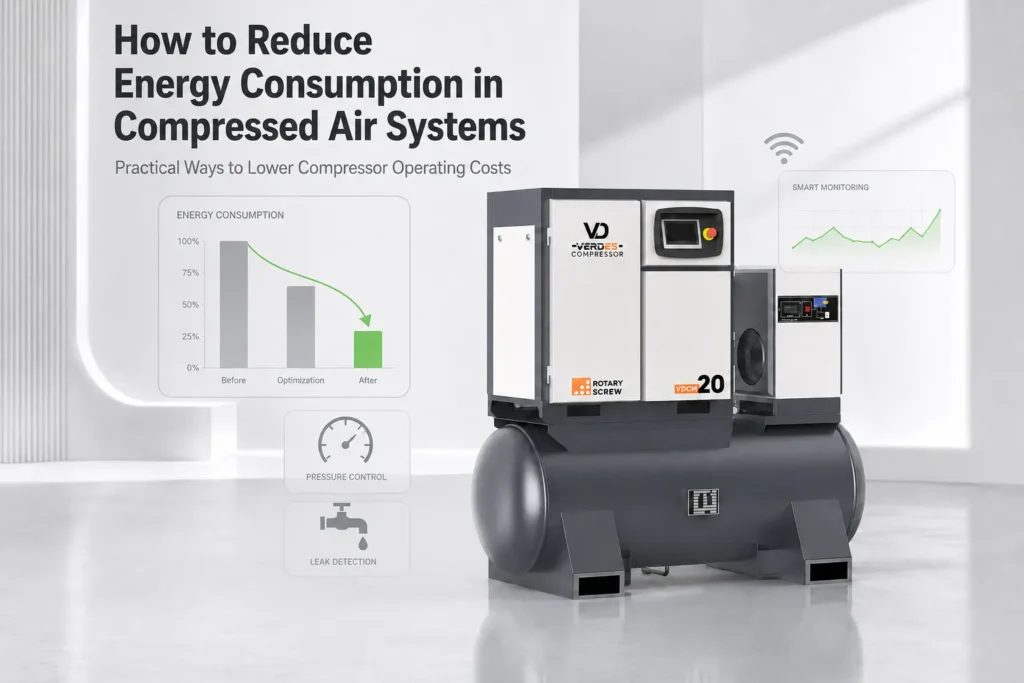
Energy consumption is one of the highest operational costs in mining. To reduce costs and improve environmental sustainability, selecting an energy-efficient compressor is critical. VSD (Variable Speed Drive) compressors are particularly effective in mining operations with fluctuating air demands. These compressors adjust their motor speed based on demand, providing energy savings during periods of lower air usage.
Energy-efficient compressors not only reduce electricity costs but also extend the lifespan of equipment by minimizing wear and tear during periods of low demand.
Explore our Energy-Efficient Diesel Air Compressors designed for mining operations.
Durability and Reliability
Mining environments are harsh, with extreme temperatures, dust, and vibrations that can rapidly wear down equipment. Compressors used in these environments must be durable and reliable. Selecting a compressor designed specifically for mining operations—one that can withstand such conditions—ensures continuous, safe operations without unnecessary downtime.
Choosing rugged compressors with features like reinforced frames and dust-resistant filters is crucial for minimizing wear and tear and ensuring long-term performance.
Air Quality
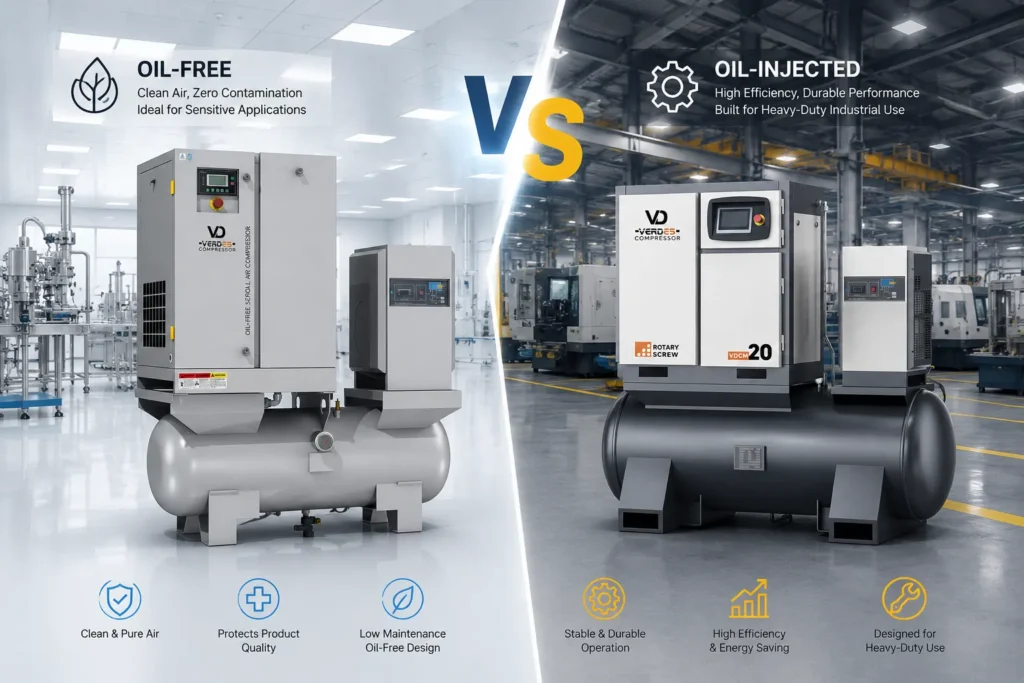
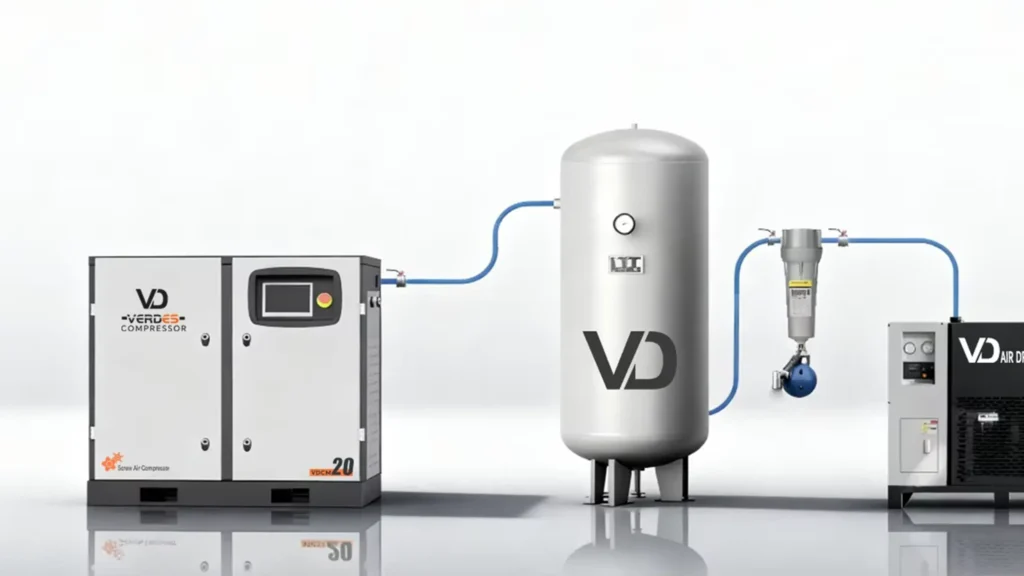
For mining operations, especially those requiring clean air for pneumatic tools or sensitive equipment, oil-free compressors are ideal. Oil-free air compressors eliminate the risk of oil contamination, which can damage tools or harm the mining process. Furthermore, it’s essential to have moisture traps and air dryers in place to maintain clean, dry air, particularly in underground or wet mining conditions.
4. Types of Compressors for Mining Applications
Reciprocating Compressors (Piston Compressors)
Reciprocating compressors are ideal for smaller mining operations or intermittent use. They are affordable and easy to maintain but are not as efficient for continuous, high-demand operations.
- Pros: Low initial cost, simple design, suitable for small, intermittent use
- Cons: Noisy, less efficient at higher loads, requires more frequent maintenance
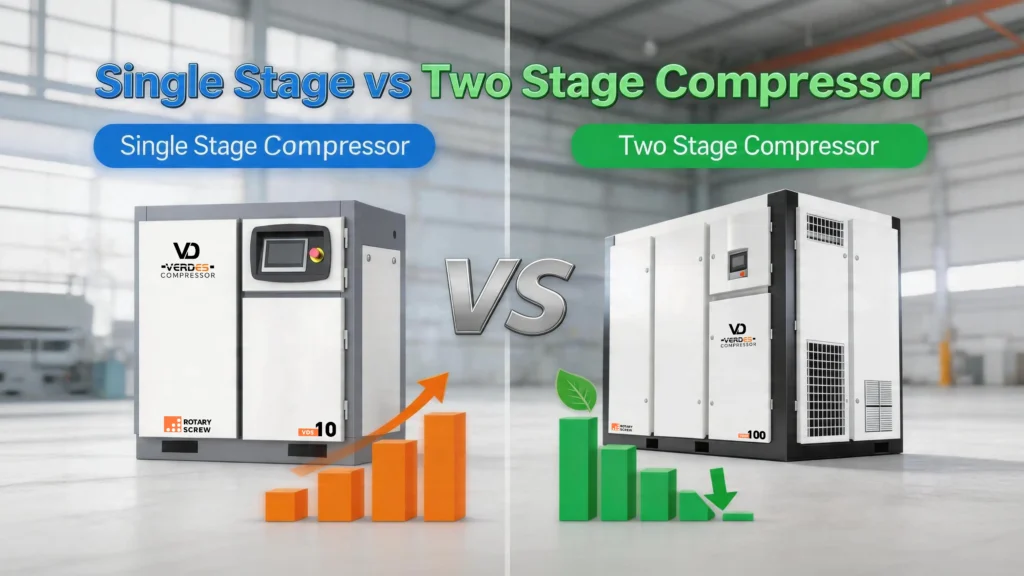
Screw Compressors (Rotary Screw Compressors)
Screw compressors are a popular choice for large mining operations that require continuous air supply. They are more energy-efficient than reciprocating compressors and are capable of providing steady performance over long periods.
- Pros: Energy-efficient, reliable for continuous use, low maintenance
- Cons: Higher initial cost, best suited for larger operations
Centrifugal Compressors
Centrifugal compressors are best for large-scale mining operations that demand a high flow of compressed air. These compressors are designed for continuous use and offer excellent efficiency for high-output applications.
- Pros: High capacity, long-term reliability, energy-efficient for large-scale operations
- Cons: High upfront cost, best for very large mining setups
Oil-Free Compressors
Oil-free compressors are ideal for mining operations requiring clean air for tools and equipment. They prevent oil contamination, which is essential for high-precision operations.
- Pros: Clean, dry air, ideal for sensitive equipment
- Cons: Higher initial cost, more complex maintenance
Diesel Air Compressors
Diesel air compressors are especially useful for mining operations in remote or off-grid locations where electricity is unavailable. They are mobile, robust, and can handle demanding tasks like drilling, blasting, and material handling.
- Pros: Portable, reliable, can operate without electricity, ideal for mobile or remote operations
- Cons: Fuel consumption, emissions concerns, and maintenance complexity
5. Diesel Air Compressors for Mining Operations
Why Choose Diesel Air Compressors for Mining?
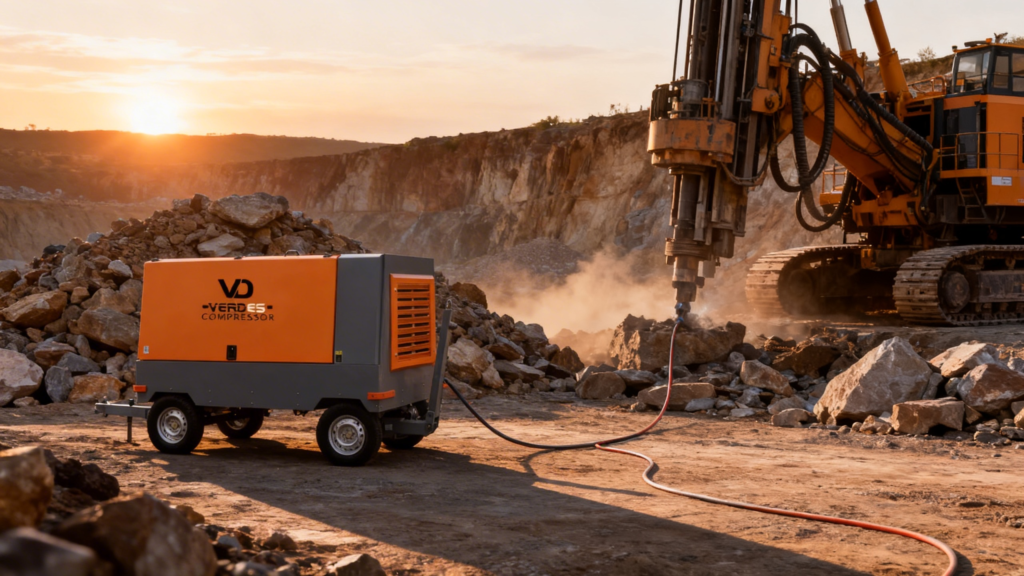
Diesel compressors provide the flexibility needed in remote mining sites where electrical power isn’t feasible. These compressors are designed to operate independently of local power grids, providing a crucial air supply in areas with limited infrastructure.
Advantages of Diesel Compressors for Mining:
- Portability: Diesel compressors are highly portable and ideal for underground or remote mining locations.
- Independence from Electrical Infrastructure: Diesel-powered compressors can function in areas without reliable electricity, giving operators flexibility in choosing locations for equipment.
- High Power Output: Diesel compressors offer high-powered output for demanding tasks like rock drilling, material handling, and more.
Challenges to Consider:
- Fuel Consumption and Costs: Diesel compressors require fuel, which can increase operational costs. It’s essential to consider the long-term fuel efficiency when choosing a diesel compressor.
- Emissions: Diesel-powered units emit exhaust gases, which may need to be managed, especially in confined mining areas.
- Maintenance: Diesel compressors require regular maintenance, including oil changes, filter replacements, and fuel checks to keep them running at peak efficiency.
6. Matching the Right Compressor to Your Mining Operation
The correct compressor depends on the specific needs of your mining operation:
- Small-Scale Mining Operations: A reciprocating compressor may be sufficient for smaller, less intensive mining activities.
- Medium-Scale Mining Operations: A screw compressor offers a good balance between cost, efficiency, and reliability for operations with consistent air demand.
- Large-Scale Mining Operations: Centrifugal compressors are ideal for large mining projects with high air demands.
- Underground vs Surface Mining: For underground mining, portable diesel compressors offer mobility and independence from electrical infrastructure, while surface mining operations can benefit from stationary compressors.
7. Ensuring Proper Maintenance for Longevity and Performance
Proper maintenance is essential for ensuring that your compressor runs efficiently and lasts longer. Key practices include:
- Cleaning and replacing air filters
- Checking moisture traps and dryers
- Inspecting oil levels (for oil-lubricated units) and performing regular servicing
- Proactively addressing issues to avoid costly downtime
8. Common Mistakes to Avoid When Selecting Air Compressors for Mining
- Undersizing the Compressor: Insufficient airflow or pressure leads to inefficiency and equipment failure.
- Neglecting Durability: Mining compressors must withstand harsh environments. Avoid compressors not built for high-dust, high-heat conditions.
- Neglecting Maintenance: Poor maintenance practices lead to frequent breakdowns and costly repairs.
- Overestimating Air Demand: Oversized compressors lead to higher energy costs.
9. Conclusion
Selecting the right air compressor system for mining operations is crucial for maintaining efficiency, reducing operational costs, and ensuring safety. By evaluating key factors such as airflow, pressure, air quality, and energy efficiency, you can choose the best compressor system for your mining needs.
At VD Compressor, we offer a variety of air compressors designed for mining applications. From portable diesel compressors to high-efficiency screw and centrifugal compressors, we have th