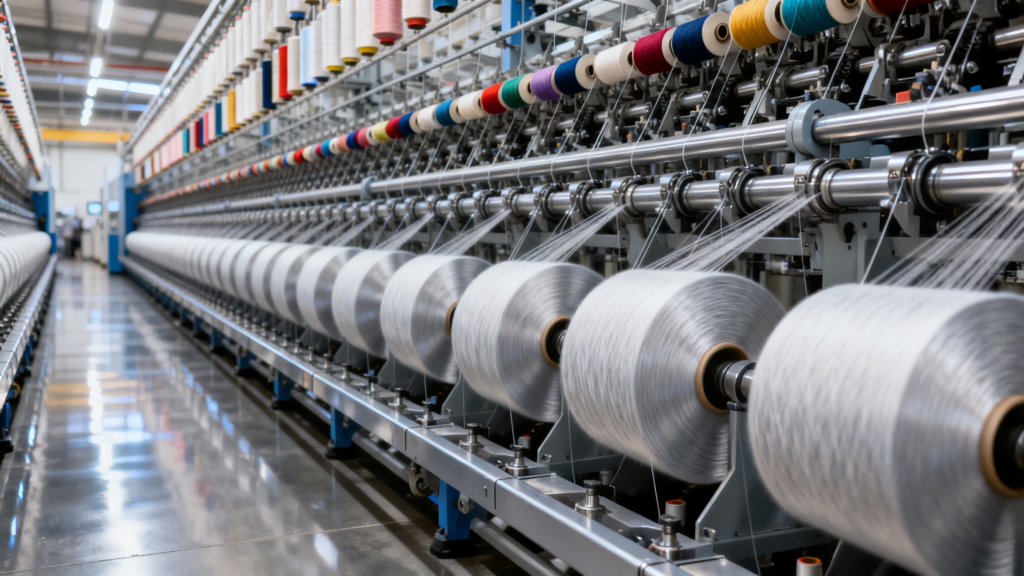
In the textile industry, air compressors are a vital component of many production processes. They power pneumatic machines, assist with textile finishing, and help maintain the overall efficiency of textile operations. Selecting the right compressor system can directly impact your production speed, energy costs, and product quality. In this article, we will guide you through the essential factors to consider when choosing a compressor air system for textile operations, covering everything from airflow requirements to compressor types.
1. Introduction
Air compressors are essential in textile production for powering machinery like looms, sewing machines, and dyeing equipment. They also provide air for textile finishing processes such as drying, pressing, and dyeing. Selecting the correct compressor system is crucial to ensuring consistent production, reducing downtime, and maintaining product quality. In this article, we will explore the factors that affect compressor selection for textile applications, focusing on efficiency, performance, and long-term reliability.
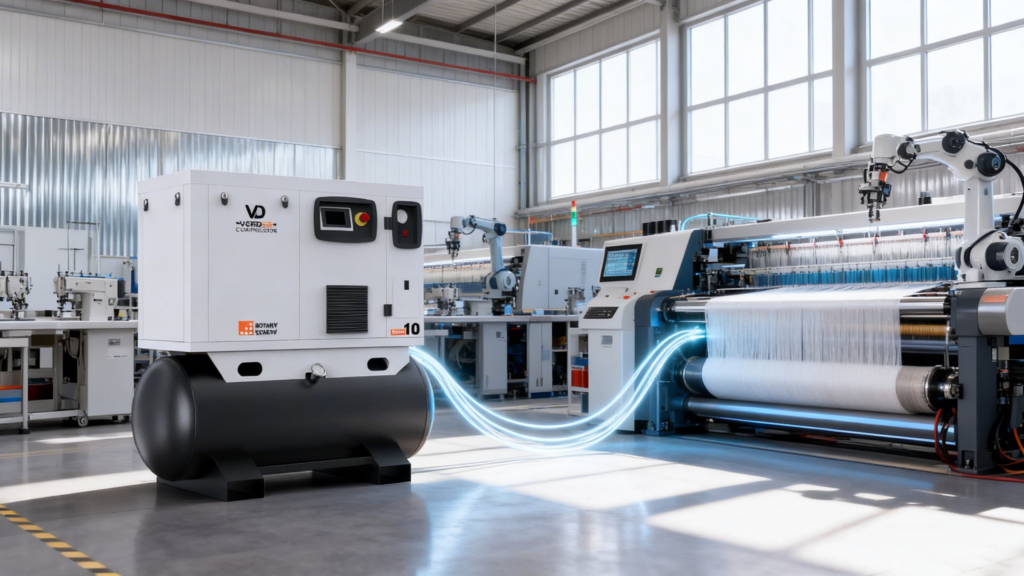
2. Understanding the Role of Air Compressors in the Textile Industry
In textile manufacturing, air compressors serve multiple essential functions. These include:
- Powering Pneumatic Machines: Many textile machines, such as looms and sewing machines, rely on compressed air to operate efficiently.
- Assisting in Textile Finishing: Compressors are also used in textile finishing processes like dyeing, drying, and pressing, providing the necessary air pressure for smooth operation.
- Controlling Machine Speed and Ensuring Fabric Quality: Consistent air pressure helps regulate machine speed, which ensures that fabric is processed evenly without defects.
Choosing a compressor that provides stable and clean air is critical in ensuring that the fabric finishes smoothly, with no air contamination or inconsistency in pressure, which could compromise the product.
3. Key Factors to Consider When Choosing a Compressor Air System for Textile
Airflow Requirements (CFM)
The amount of airflow required, measured in CFM (Cubic Feet per Minute), is one of the most critical factors when selecting a compressor. The amount of airflow needed depends on the type of textile machinery and the intensity of operations. For example, high-demand machines like dyeing and finishing equipment typically require higher airflow than smaller machines like sewing machines.
Properly calculating the required CFM ensures that the compressor can supply enough airflow to meet the machine’s needs without overworking the system, which can lead to inefficiencies and premature wear.
Pressure Requirements (PSI)
Air pressure is another vital consideration. Textile machines typically operate at pressures between 90 and 120 PSI, though this varies depending on the machine and process. Selecting a compressor that can maintain consistent and reliable pressure at the required level is critical for smooth operation and quality output.
Pressure fluctuations can lead to uneven finishes, machine malfunction, or other defects in the textile, which is why maintaining steady PSI is essential for any textile production.
Energy Efficiency
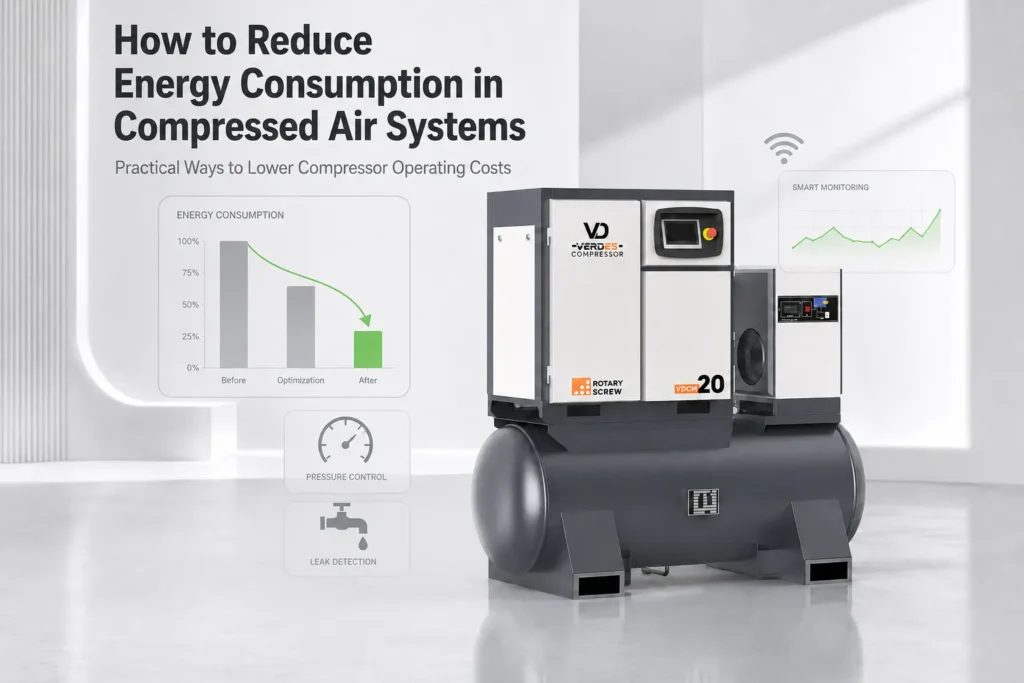
The textile industry operates on a large scale, which makes energy consumption one of the most significant operational costs. Choosing an energy-efficient compressor can significantly reduce electricity costs. VSD (Variable Speed Drive) compressors are particularly useful for textile production because they adjust their motor speed based on demand, ensuring that energy is only consumed when needed.
These energy-efficient models also minimize wear and tear by running only when required, leading to longer lifespans and reduced maintenance costs.
Air Quality (Dry and Clean Air)
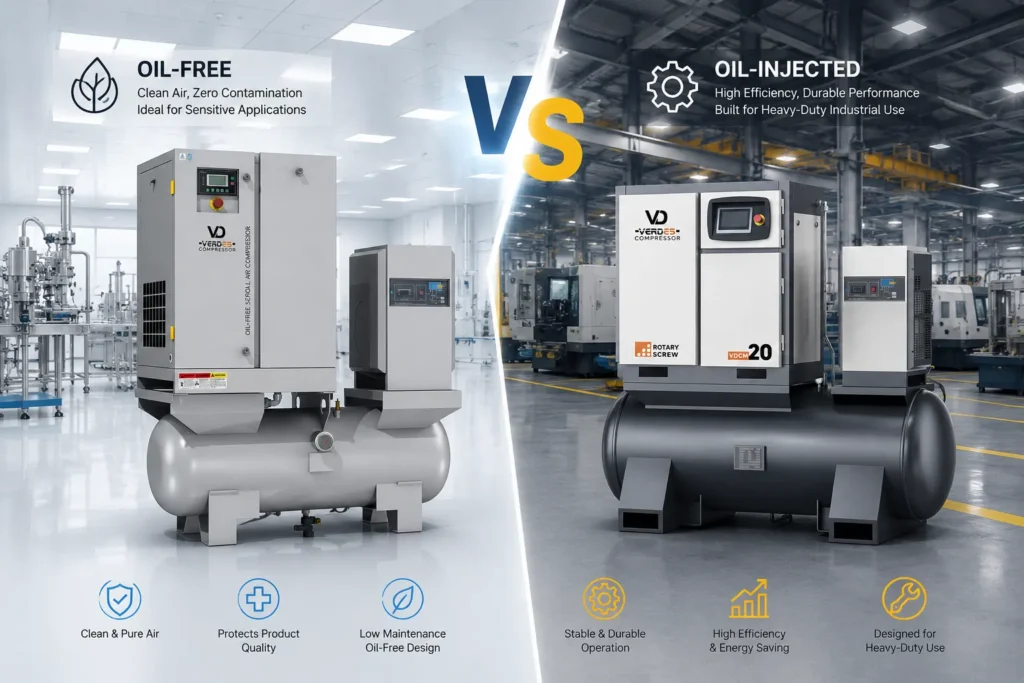
Contaminants such as moisture, oil, and dirt can damage textile machinery and compromise product quality. It’s crucial to choose a compressor that supplies clean, dry air to avoid defects in fabric finishes. Many textile processes, especially dyeing, require oil-free compressors or ones with advanced filtration systems to prevent contamination.
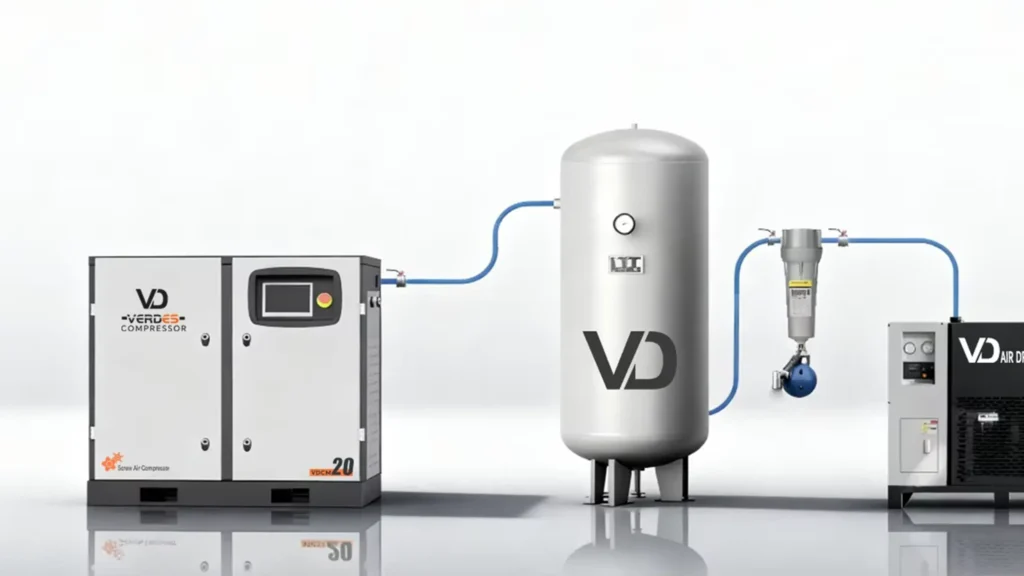
Ensure that the compressor system has moisture traps and air dryers to keep the air supply clean and dry.
Continuous vs. Intermittent Air Demand
In textile manufacturing, air demand can either be continuous or intermittent, depending on the type of machinery and production schedule. For operations with constant air usage, a screw compressor is often the best choice due to its high efficiency in continuous operation.
It’s important to understand your specific production needs and choose a compressor that can provide the right type of airflow based on your operation’s demand pattern.
4. Types of Compressors for Textile Industry Applications
There are several types of compressors that can be used in textile applications, each suited to different needs based on scale, air quality, and production capacity.
Reciprocating Compressors (Piston Compressors)
Reciprocating compressors are ideal for small to medium-scale textile operations with moderate air demand. They are affordable and easy to maintain, but they are less efficient at handling continuous or high-demand air needs.
- Pros: Low initial cost, easy to maintain, ideal for small operations
- Cons: Noisy, less efficient at higher loads
Screw Compressors (Rotary Screw Compressors)
Screw compressors are commonly used in larger textile operations due to their ability to provide continuous, stable air pressure. These compressors are highly efficient, durable, and able to handle high air demands, making them perfect for large-scale textile production.
- Pros: High efficiency, quieter operation, ideal for continuous use
- Cons: Higher initial cost
Oil-Free Compressors
Oil-free compressors are especially important for textile production where air quality is paramount. These compressors ensure that no oil contaminates the air supply, which is critical for fabric dyeing, finishing, and other sensitive processes that require clean, dry air.
- Pros: Clean, dry air, no oil contamination
- Cons: Higher initial cost, more complex maintenance
Centrifugal Compressors
Centrifugal compressors are best for large textile mills with high air volume needs. These compressors are designed to provide high-flow, low-pressure air efficiently. They are best suited for large-scale textile operations requiring continuous and high-volume air delivery.
- Pros: High capacity, low maintenance, energy-efficient for large operations
- Cons: High upfront cost, best for large facilities
Discover our full range of Screw Compressors for high-efficiency textile applications.
5. Matching the Right Compressor to Your Textile Operation
The right compressor for your textile operation depends on your production scale and air demand. For small-scale operations, a reciprocating compressor may be sufficient, while medium and large operations will likely benefit from screw compressors that can handle continuous demand. If your operation requires oil-free air for precision processes like dyeing or finishing, investing in an oil-free compressor is essential.
For high-demand textile mills, a centrifugal compressor may be the best option to ensure continuous and efficient operation.
Browse our range of Oil-Free Compressors for clean and reliable air systems.
6. Maintenance and Longevity: Ensuring Efficient Performance
Proper maintenance is essential to ensure the longevity and efficiency of your air compressor. Regular maintenance should include:
- Cleaning and replacing filters: Helps prevent debris and dirt from entering the compressor.
- Monitoring moisture traps: Ensures clean, dry air is delivered to the machines.
- Checking for leaks: Leaks waste energy and reduce system efficiency.
- Regularly inspecting oil levels (for oil-lubricated compressors) to avoid damage to internal components.
Following a consistent maintenance schedule will reduce downtime and ensure your system runs efficiently for years.
7. Common Mistakes to Avoid When Selecting an Air Compressor for Textile
- Undersizing the Compressor: A compressor that cannot meet airflow or pressure requirements will cause operational issues and reduce efficiency.
- Neglecting Air Quality: Failing to account for air quality can lead to contaminants affecting fabric finishes, especially in dyeing or printing.
- Overestimating Compressor Size: Over-sizing a compressor leads to unnecessary energy consumption and higher initial costs.
- Ignoring Long-Term Costs: Don’t just focus on initial cost. Consider energy efficiency and maintenance costs for a more informed decision.
8. Conclusion
Choosing the right air compressor for your textile operation is essential for optimizing production efficiency, reducing energy costs, and maintaining high-quality output. By considering factors like airflow, pressure, energy efficiency, and air quality, you can select the right compressor for your needs.
At VD Compressor, we offer a variety of compressors tailored for textile applications. Whether you’re looking for an energy-efficient screw compressor or a high-performance oil-free model, we can help you find the perfect solution for your textile operation.
Explore our Product Catalog for more air compressor solutions.