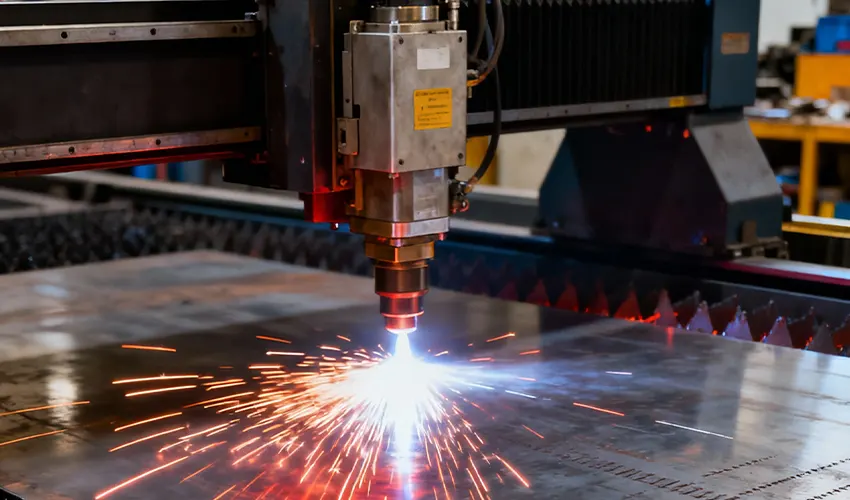
Choosing the right air compressor for a laser cutting machine is critical to cutting quality, equipment stability, and long-term operating costs. Many factories focus only on pressure and flow, but compressed air quality, stability, and system integration are often overlooked—and these factors directly affect lens protection, cutting consistency, and downtime.
This guide explains the key factors you should consider before selecting an air compressor for laser cutting applications.
1. Required Pressure and Airflow Stability
Laser cutting machines typically require stable high-pressure air, commonly 13 bar, 16 bar, or even 20 bar, depending on the material and cutting process. However, pressure stability is more important than peak pressure.
An undersized or unstable compressor can cause inconsistent cuts, rough edges, or frequent machine alarms. When selecting a compressor, ensure it can deliver continuous airflow at the required pressure without large fluctuations during long operating cycles.
2. Air Quality Matters More Than You Think
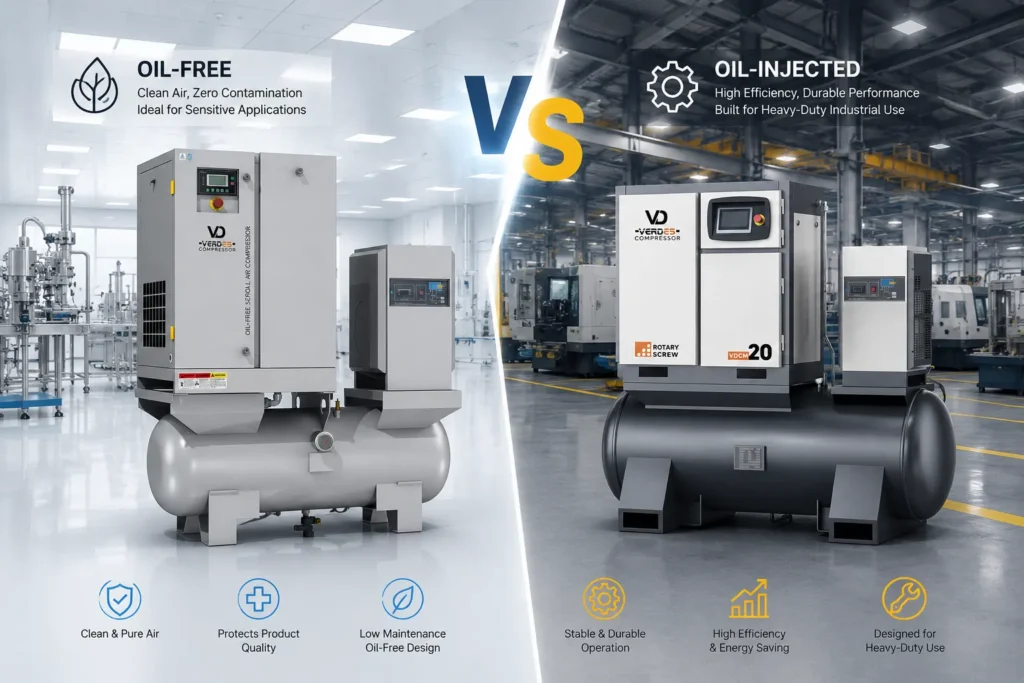
Compressed air used in laser cutting must be clean, dry, and oil-free or near oil-free. Moisture, oil vapor, and solid particles can contaminate the cutting lens, reduce cutting accuracy, and significantly shorten lens life.
A proper laser cutting air compressor system should include:
- Efficient air drying to remove moisture
- Multi-stage filtration to eliminate oil and particles
- Stable pressure delivery to the cutting head
Poor air quality often leads to higher maintenance costs than the compressor itself.
3. Integrated System vs Separate Equipment
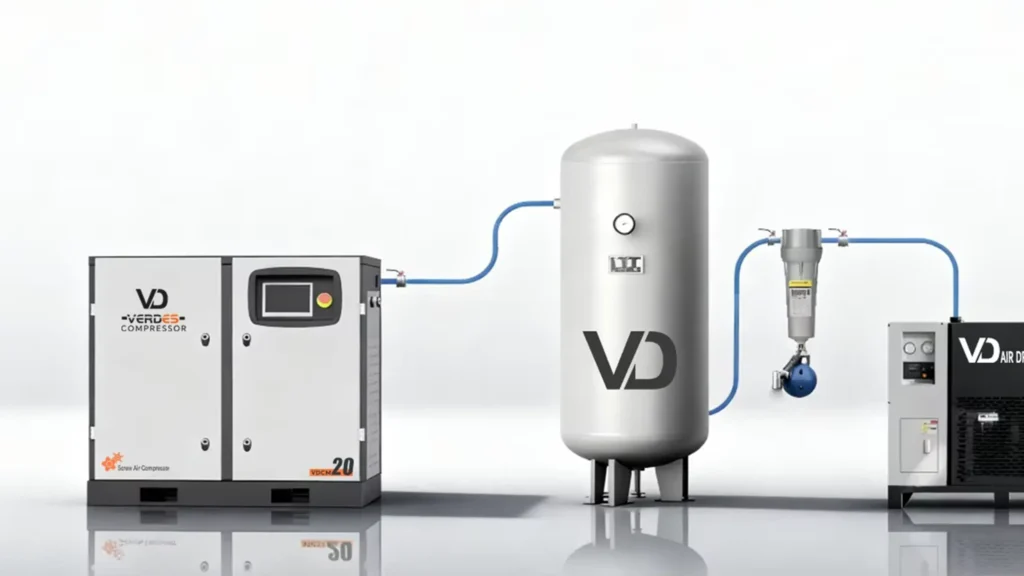
Many factories still use separate air compressors, dryers, filters, and storage tanks. While this setup may appear flexible, it often results in higher pressure loss, more piping connections, and increased maintenance complexity.
Integrated laser cutting air compressor systems combine the compressor, dryer, filters, and air tank into one optimized unit. This reduces installation time, minimizes pressure drop, saves space, and improves overall system reliability.
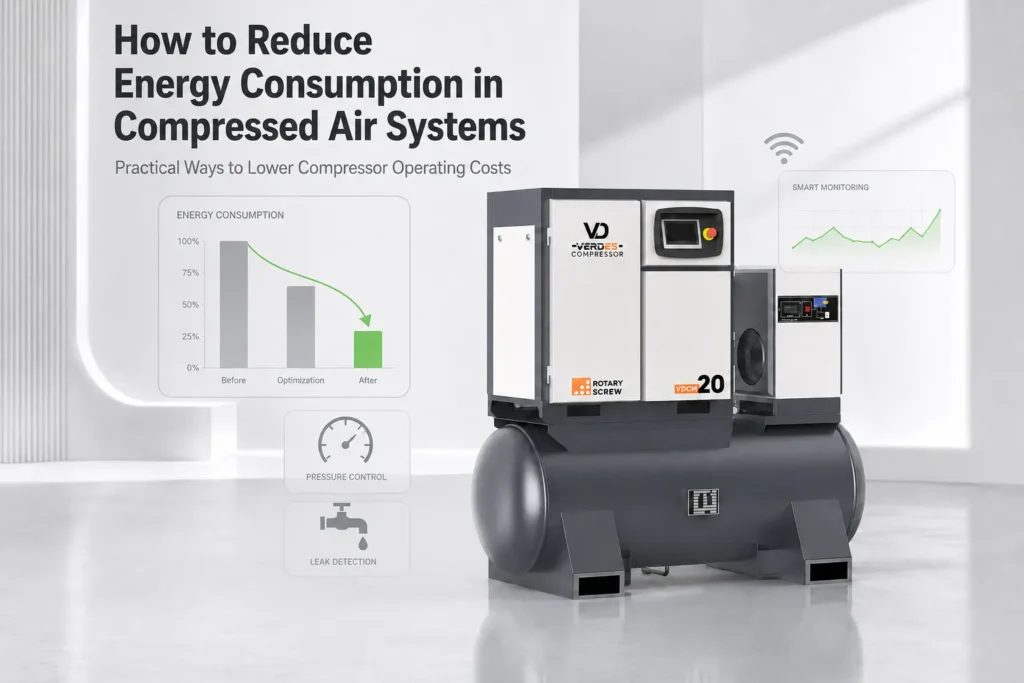
4. Energy Efficiency and Operating Cost
Laser cutting operations usually run for long hours, making energy consumption a major cost factor. Compressors operating far from their optimal load range waste energy and increase electricity bills.
Look for systems with:
- Efficient compression technology
- Intelligent control for load adjustment
- Optimized airflow design to reduce pressure loss
Lower energy consumption directly improves return on investment over time.
5. Reliability and After-Sales Support
Laser cutting production depends on continuous operation. Compressor failure can stop the entire cutting line. Beyond technical specifications, reliability, build quality, and after-sales support are critical decision factors.
Choose a supplier with proven experience in laser cutting applications, standardized testing procedures, and accessible technical support to minimize downtime risks.
Final Thoughts
Selecting an air compressor for laser cutting machines is not just a technical decision—it is a long-term operational investment. By focusing on pressure stability, air quality, system integration, and energy efficiency, manufacturers can achieve better cutting results, lower maintenance costs, and more stable production.
If you are planning to upgrade or optimize your laser cutting air supply system, an integrated high-pressure air compressor designed specifically for laser cutting applications can offer a safer and more cost-effective solution.